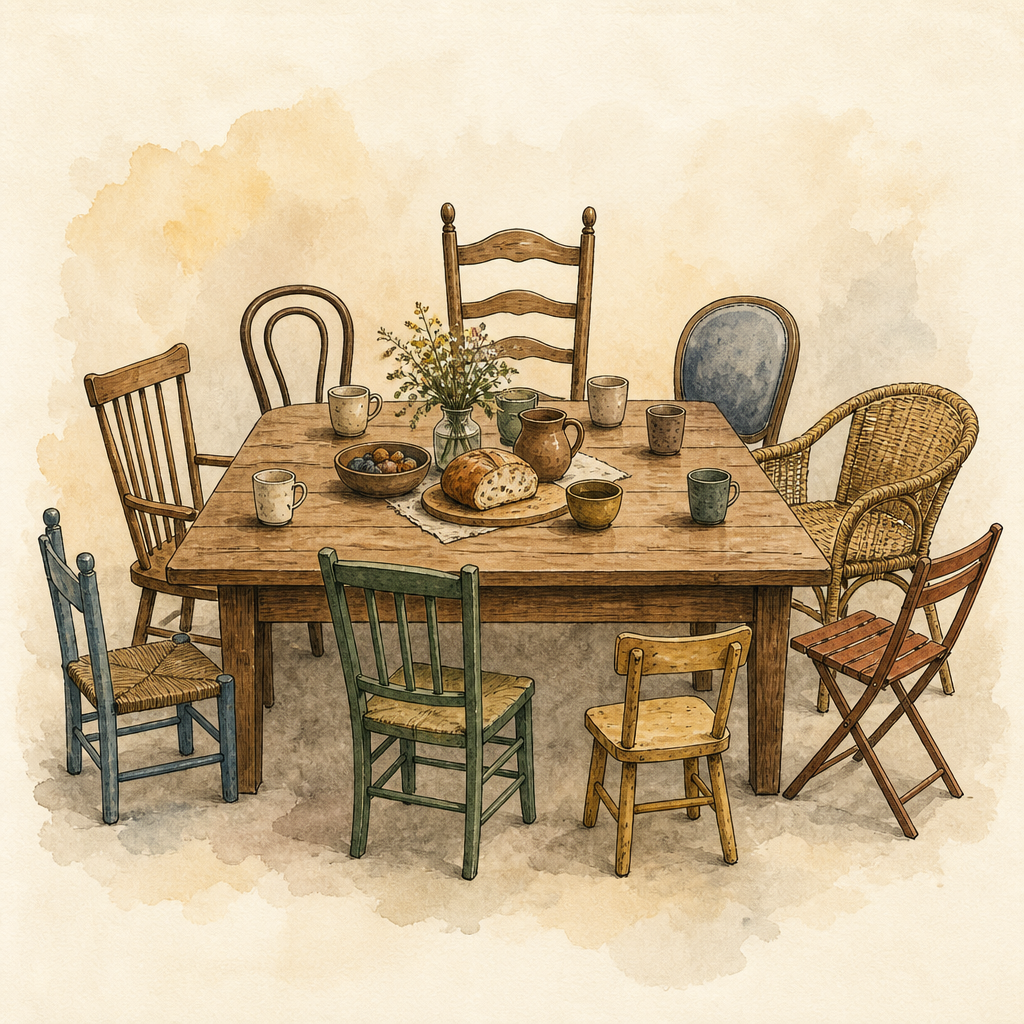
A table is not a stage
Every Sunday, someone sets a table and someone else wonders if they are invited. It sounds like a small domestic worry. It is also, it turns out, the exact shape of the news today.
In India, crowds are in the streets of the capital over revisions to the voter rolls — the ledger that decides, literally, who gets a seat at democracy's table on election day. A line is drawn through a name, and a citizen becomes a spectator in their own country. The largest democracy on earth is arguing with itself about whether the table should get bigger or smaller. That argument, loud and messy as it looks, is a healthier sound than silence. A democracy that lets its own people shout about the guest list is still, mercifully, a democracy.
Deciding for someone else, from somewhere else
Compare that with a quieter, colder version of the same question. A foreign leader suggests it is "time for Ukraine to get a new president," even as that country's own president objects to a diesel deal struck between Washington and Moscow — a deal that eases sanctions on the very state waging the war. Notice the arrangement: two large powers discuss fuel and leadership over a smaller nation's head, while that nation buries twenty more of its people under a glide bomb the same week.
Nobody asked Ukraine's voters whether they'd like a seating change arranged for them by outsiders. That is the oldest trick of power: not to abolish the table, just to start deciding, politely, who may sit at it. Ask yourself plainly — would any of us accept a stranger telling us who should run our household, while also quietly deciding what fuel we're allowed to buy? Reciprocity is not complicated. What you would not accept done to you, do not applaud when it is done to someone else's country.
When there is no table at all
Then there is Myanmar, where young men describe living in fear of being snatched off the street and sold into the army's ranks. This is not an argument about who gets a chair. It is the complete absence of a table — a person reduced to inventory for someone else's war. If the voter-roll debate is democracy's growing pains and the Ukraine deal is diplomacy's old bad habit, Myanmar is the plain, unadorned picture of what a society looks like with no table left standing at all. It is worth sitting with that image before complaining about paperwork anywhere else.
Egypt's journalists, planning a weekend protest over six detained colleagues, are fighting for something smaller and no less essential: a chair at the table of public conversation itself. A press that cannot speak is a dinner where only the host is allowed to talk. The Nobel committee, in the same week, honored Navi Pillay for a career spent insisting that international law exists precisely to guarantee that every person — refugee, prisoner, journalist, conscript — keeps a claim to a seat somewhere. It is a reminder, gently timed, that the whole architecture of human rights law is just a very elaborate way of saying: set another place.
The standpoint
Here is the wise position, and it is not a complicated one. A healthy society is measured less by its wealth than by its chair count — how many people get an actual say in decisions made about their own lives, and how loudly they're allowed to complain when a chair goes missing. Widening that table, through fair voter rolls, free press, and sovereignty respected rather than bartered over diesel, is not idealism. It is the cheapest insurance policy against the slow creep of authoritarian habits, which almost never arrive announcing themselves. They arrive as a line through a name on a list, a foreign suggestion about who should lead, a van on a street corner at night.
The test for any democracy, old or young, is not whether it has conflict over its table — conflict over who sits where is democracy's actual job. The test is whether it fixes the table through its own institutions, in daylight, with its own people arguing it out, rather than outsourcing the seating chart to someone else's convenience. One shared table, argued over loudly by everyone entitled to be there, beats a quiet one set by a smaller and smaller circle every single time.