Two Queues
Somewhere today, a man is standing in a line for fuel he can barely afford. Somewhere else, a younger man is standing in a different line — for a rifle, a stipend, and a sense of belonging offered by a militia. These are not the same event. But they rhyme.
Rising gas prices are fuelling protests in countries around the world this year. People are angry, and reasonably so: fuel is not a luxury, it is the price of getting to work, of moving goods, of simply functioning. A protest against an unaffordable pump price is not noise. It is citizens doing their job — holding power accountable in public, which is itself a form of civic labour worth respecting.
Meanwhile, across the Sahel, violence linked to al-Qaida and Islamic State affiliates is set to hit record levels this year. Analysts will offer many explanations — weak states, porous borders, colonial residue, climate stress. All true. But ask a simpler, ruder question: what does a twenty-year-old man do with his morning if no legitimate economy wants his labour? Extremist groups have long known the answer their governments could not supply: a task, a wage, a rank, a story that says you matter. That is a grotesque parody of dignity. But it is dignity's shape, borrowed and weaponised.
The Uncomfortable Symmetry
Here is the uncomfortable symmetry: both the protester at the pump and the recruit in the camp are responding to the same absence — a society that has not made room for them to contribute and be seen contributing. One channels that absence into democratic pressure. The other is captured by men selling belonging at gunpoint. The difference between the two outcomes is not character. It is infrastructure — jobs, functioning courts, a state that shows up before the recruiter does.
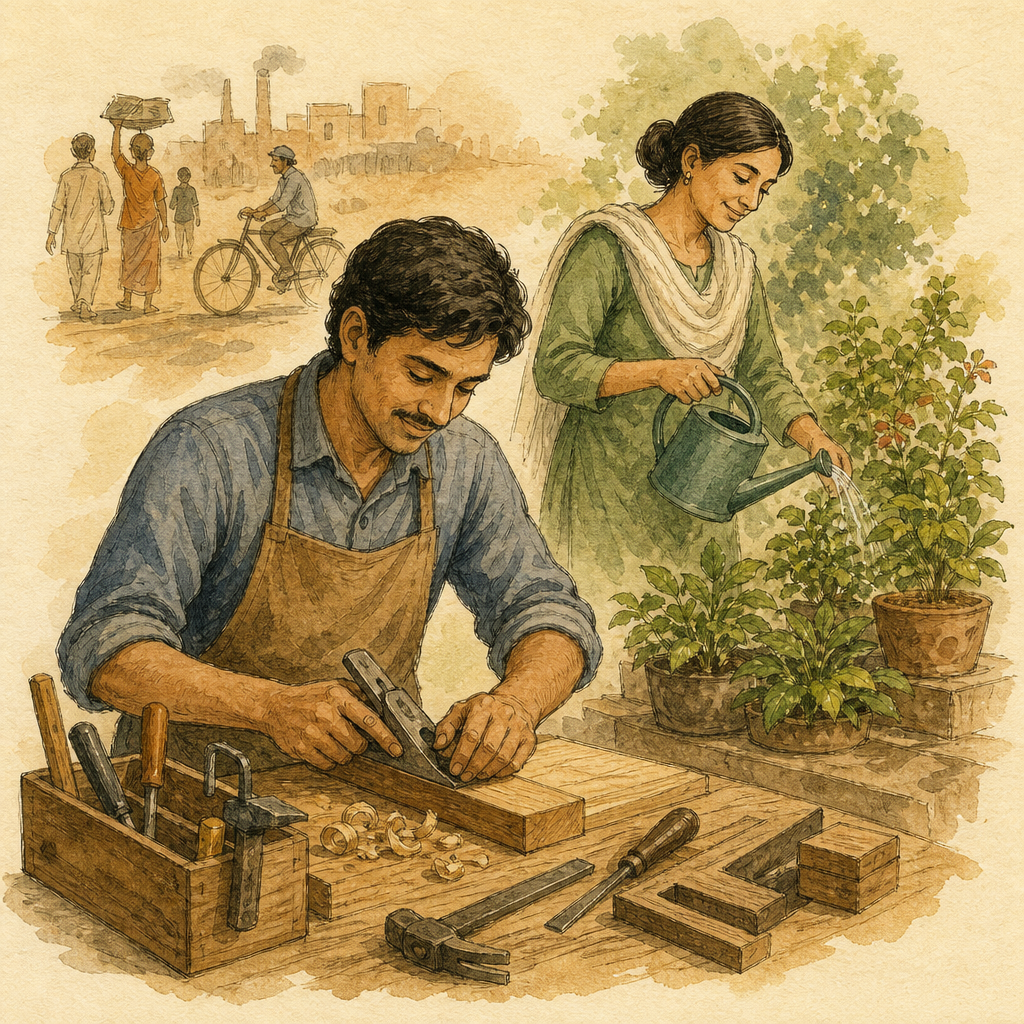
This is why "dignity of work" is not a slogan for people who already have desks. It is a security policy. A young man with a real job, a real wage, and a real stake in tomorrow is a poor customer for an ideology that asks him to die on Tuesday. Societies that fail to offer the first thing should not be surprised when someone else offers the second.
Contribution, Not Cruelty
None of this argues for cruelty toward those who genuinely cannot work — the sick, the elderly, the disabled, the child. Compassion for those who cannot carry a load is not weakness; it is the same neighbourliness this newspaper keeps returning to, the golden rule applied downward as well as sideways. The argument is narrower and, we think, wiser: those who can contribute should be expected to, and given a real chance to, because idleness imposed by policy failure is not freedom — it is a vacuum, and vacuums get filled by someone.
Sweden changed governments this week after an election loss, the ordinary and almost boring way democracies are supposed to change governments — no coup, no tanks, just a resignation and a handover. Boring is underrated. It is what a functioning labour market and a functioning ballot box have in common: both let people register dissatisfaction without burning anything down. Meanwhile the EU's proposal to bring Canada closer as an associate partner is, read generously, two mature economies agreeing to pull weight together rather than resent each other from a distance — cooperation as a form of shared contribution between democracies.
The Wise Position
So here is a stance, not just a wink: governments serious about long-term peace should treat job creation, vocational training, and honest public administration as security spending, not welfare spending. Protesting a fuel price is healthy civic muscle. Leaving a generation with nothing to do but resent the state is an invitation to men who will happily give them something to do instead.
The golden rule cuts both ways. A society that would not want to be left idle and unseen should not leave its own young people idle and unseen. Everything else — the rifles, the recruiters, the record numbers — follows from that failure, patiently, predictably, and at a cost far higher than the job training would have been.