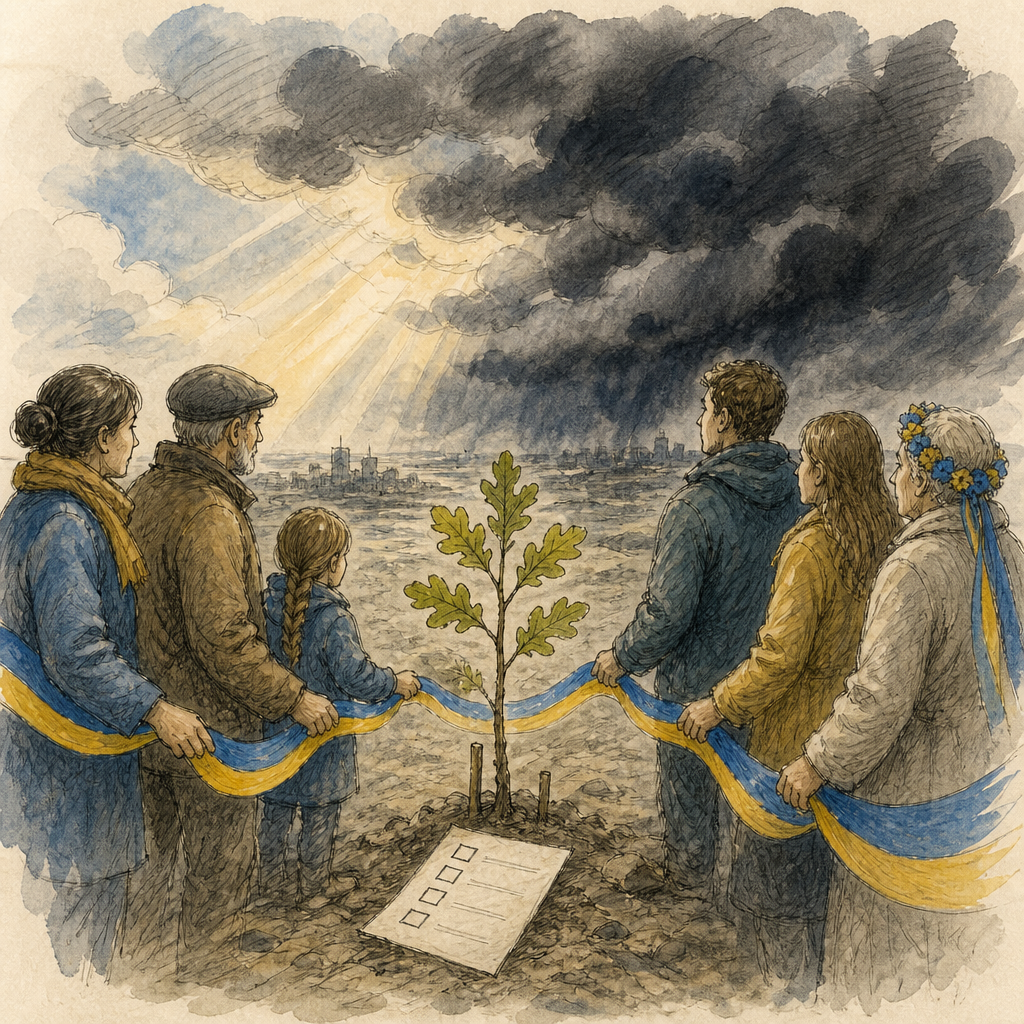
A pause, and who holds the bill
Today the news says sanctions on Russia have been suspended, and that this is meant to keep peace negotiations alive. Meanwhile Ukraine and Russia keep exchanging strikes, and relations between the American and Ukrainian presidents keep souring. Put those three facts next to each other and a question arises that is worth sitting with, not shouting about: who pays for the pause?
Not the negotiators. Not the capitals where the suspension was announced. The bill goes to the people in Kharkiv, in Kherson, in the villages whose names only appear in the news once, when the strike lands. Diplomacy often needs quiet rooms and patient men. But patience bought with someone else's air-raid siren is a strange kind of peace.
Early courage, not late regret
Our usual warning on this page is to notice dictatorship early, while protest is still cheap. Ukraine did something harder: it noticed invasion early, in 2022, and has been protesting with its whole body ever since. That is not a metaphor. A democracy under full-scale attack is still holding elections in its vocabulary, still has a parliament, still argues in public about corruption and command decisions — the ordinary, unglamorous furniture of self-government that dictatorships cannot afford to keep.
Contrast that with the regimes that frighten critics into silence by other means. An exiled critic of Rwanda's president found beheaded. A government in Senegal making hundreds of arrests of LGBTQ+ people, driving them into hiding. These are not softer stories than Ukraine's; they are the same story told without tanks. Fear is the tool, and the question for any citizen anywhere is the same: when does ordinary state power quietly become something else?
The strongman's patience, and ours
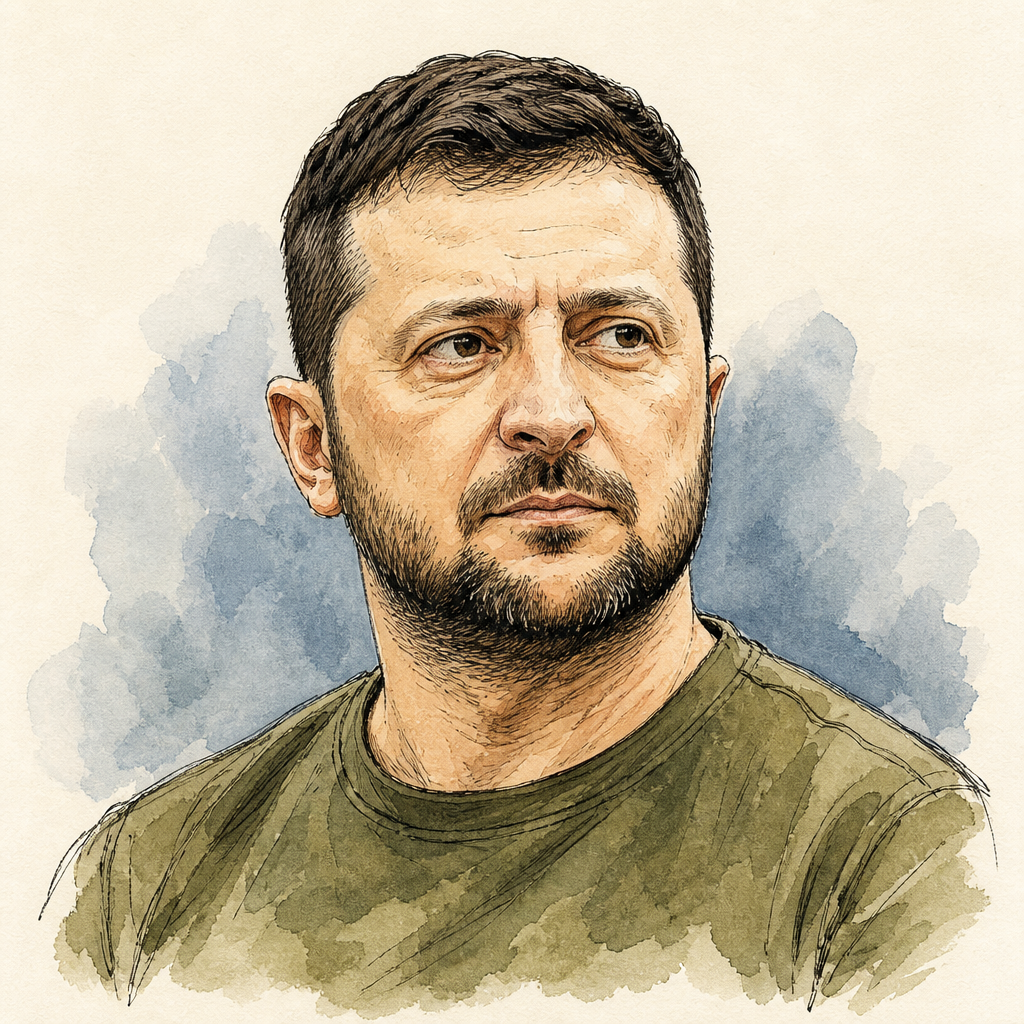
It is worth noticing, without shouting, the framing on offer: that suspending pressure on an aggressor is itself the peace effort. Perhaps. Sanctions are a blunt tool, and blunt tools sometimes need sharpening or sheathing at different moments of a negotiation. But a democracy's citizens are allowed to ask, plainly, whether removing leverage from the side holding occupied territory is a strategy for ending a war or a strategy for ending a conversation about it. Those are not the same achievement, and only one of them is peace.
Meanwhile the same week brings an American endorsement of Israel's prime minister for reelection, offered amid his own legal troubles, and a general fondness in some capitals for leaders who promise order over process. None of this proves bad faith. It does suggest a pattern worth watching: a growing comfort, among people who should know better, with strongmen as a category — admired less for what they build than for how firmly they hold on.
What solidarity actually costs
Solidarity with Ukraine was never going to be free, and a reader with common sense should resist both of the easy postures available: the one that treats every weapon shipment as moral clarity requiring no further thought, and the one that treats every ceasefire proposal as automatically wise because it is quieter. The honest position is harder and duller: judge each step by whether it strengthens Ukraine's capacity to remain a functioning democracy with its own borders, or whether it simply lowers the temperature of our own attention.
Democracies are not obligated to fight every war on earth. They are obligated, at minimum, to notice when their own stated tools for restraining aggression are loosened, and to ask why, in plain language, before applauding.
Ukraine's institutions — flawed, wartime, imperfect — are still doing something Alberta's separatists, Rwanda's exiles, and Senegal's hiding citizens would each recognize as precious: arguing in public, voting, surviving as a polity rather than a population. That is the thing worth defending. Not a flag. A habit of self-rule, kept alive under fire. If the world's patience with pausing pressure outlasts Ukraine's patience with being shelled, we should at least have the honesty to call that an abandonment, not a peace plan.