When the Ground Moves Without Warning
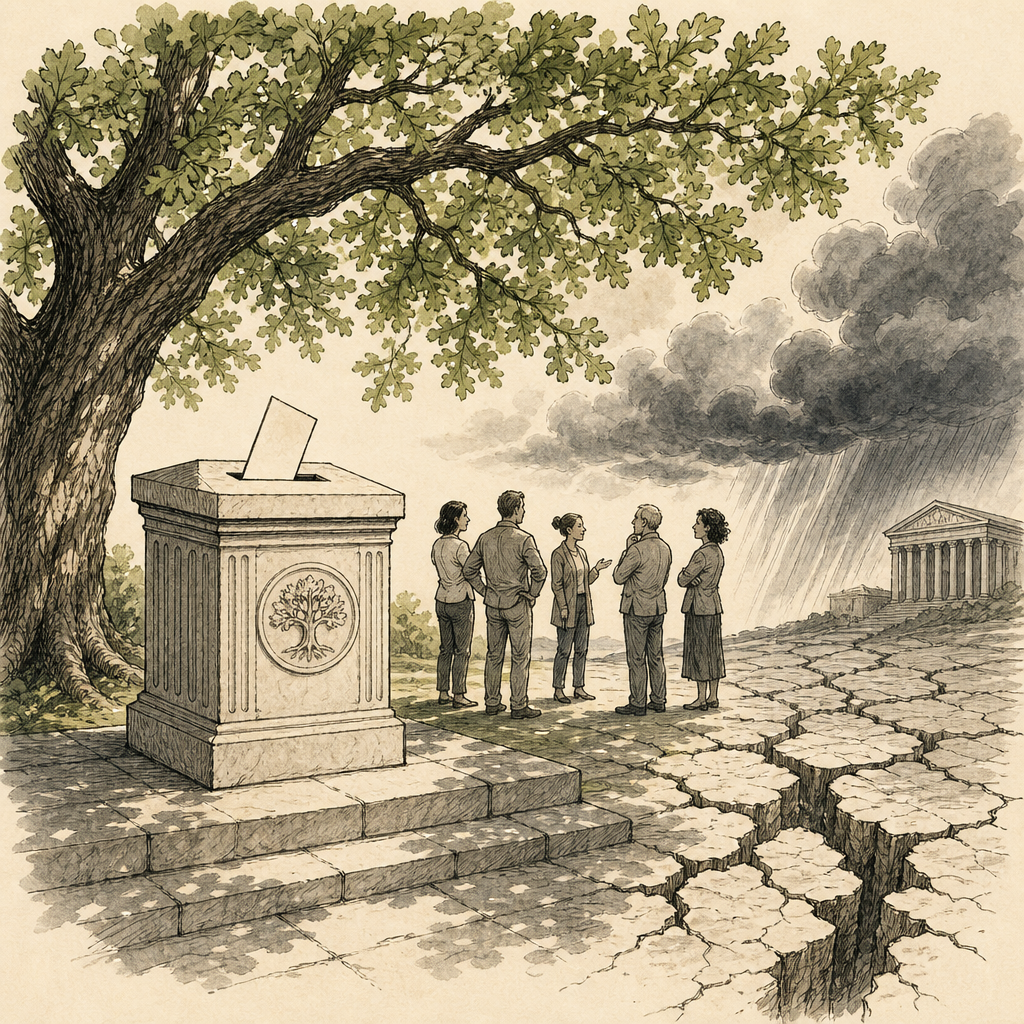
Colombia woke today to its worst earthquake in years, more than a hundred lives already counted, the number still climbing. Geologists will tell you the pressure had been building for a long time before the ground finally gave way. Politics has its own tectonics. The pressure builds in ordinary decisions — a memo here, a border checkpoint there — long before anyone calls it a crisis.
Three such decisions are quietly in today's news, and none of them looks like tyranny. That is exactly why they deserve a second look.
Closing Doors, Politely
Washington is shutting five consulates abroad, and critics warn China may simply fill the space left behind. Consulates are unglamorous things — visa stamps, lost passports, the occasional citizen in trouble. But they are also small outposts of a state's willingness to stay present in the world, to be reachable, accountable, visible. A democracy that quietly withdraws its face from the world does not become a dictatorship overnight. It simply becomes less present to answer for itself. Ask: who benefits when a free country steps back and a less transparent one steps forward to fill the room?
A Border Returns, Briefly
Spain says it will introduce temporary checks on travelers from Italy — two EU members, both democracies, one open border briefly closed. There may be a perfectly reasonable security reason. Borders inside Europe were never meant to be sacred for their own sake; they were meant to be unnecessary because trust made them so. The test isn't whether a check appears — sometimes it should. The test is whether it stays temporary, whether it's explained in public, and whether it disappears again once the reason does. Watch not the checkpoint, but the calendar.
A Court Says Yes
A US judge has approved the administration's effort to end Temporary Protected Status for South Sudanese migrants. Here is the harder case, because it looks, on its face, like the system working exactly as designed: an elected government makes a policy, a court reviews it, the court rules. That is not capture. That is due process doing its unglamorous job, whether or not the outcome is kind.
The question worth asking is not "do I like the ruling" but "could this ruling be challenged again, appealed, reversed by a different election, argued against in a free press without risk to the arguer?" If yes, the institution is breathing. If a court only ever rules one direction, on every contested question, without independent reasoning that survives scrutiny — that is a different story, and a graver one.
Why the Checklist Matters
None of these three stories, alone, is proof of anything sinister. That is precisely the discipline democracies must practice: judging each decision on its own reversibility, its own transparency, its own accountability — rather than either panicking at every headline or numbing ourselves to all of them equally.
Meanwhile, elsewhere in today's news, a ceasefire proposal sits rejected in the Middle East, and drone strikes continue deep into Russian territory. These are reminders, in case anyone needed one, of what happens when accountability disappears entirely from a state's decisions — when there is no court to ask, no free press to report, no election to correct course. Ukraine did not choose this war. Its neighbor's leadership answers to no functioning opposition, no independent judiciary, no press that could safely ask why civilians keep dying for a war of choice.
That contrast is the whole argument. Democracies are noisy, slow, and full of decisions that look, in isolation, unglamorous or even unkind. But they remain reversible. They remain answerable. The habit of asking "can this still be challenged tomorrow" is not paranoia — it is maintenance, the same unglamorous maintenance that might have mattered, geologically speaking, long before this morning in Colombia.
Defending democracy rarely looks dramatic while it's working. It looks like citizens asking small, boring, persistent questions about consulates, checkpoints, and court rulings — long before anyone needs to ask the much larger one.