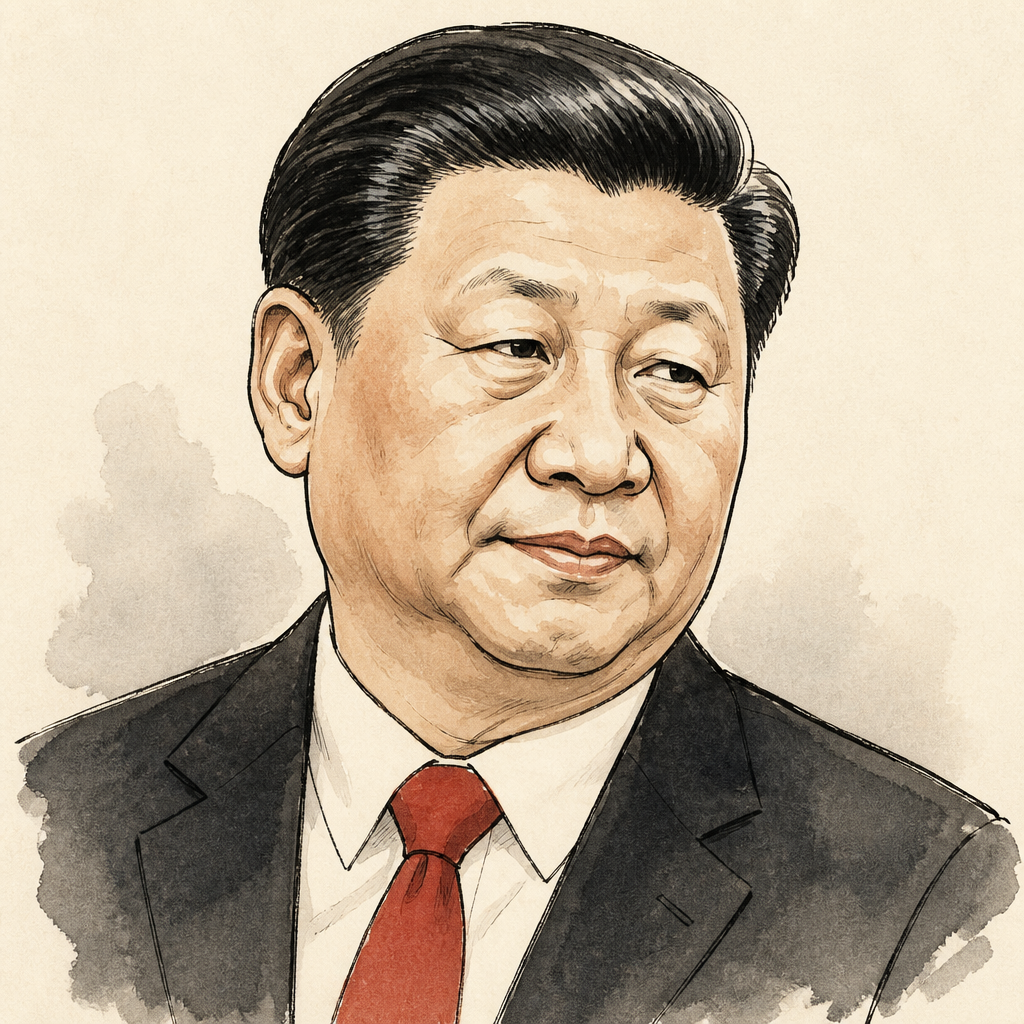
A cordial handshake, and then?
The pictures from the Trump-Xi summit tell a pleasant story: a red carpet, warm words, a "cordial tone." NPR called it that, and the cameras agreed. But the BBC added a smaller, sharper line underneath the pageantry: Xi got the welcome, but not everything he wanted.
That gap between welcome and want is worth sitting with. It is the gap where the real question about Xi Jinping lives, and it is not a comfortable one.
The fear, stated plainly
Here is the fear, without decoration: is Xi negotiating with the world, or simply waiting it out? Is each summit a genuine exchange between equals, or a rehearsal — a way to keep democracies calm, distracted, and talking, while the balance of power quietly tips toward a day when talking is no longer required?
A patient man does not need to win every meeting. He only needs the other side to keep believing the meetings matter, right up until they don't.
This is not an accusation with a court date attached. It is a question a free press is allowed to ask out loud, precisely because Xi's own press is not allowed to ask it at all.
Look at who corrects themselves
Here is where the same week offers, almost by accident, a useful contrast. In Washington, the White House tried to ban certain outlets from a dinner despite a judge's order — and a court pushed back, restoring access. NPR even ran a piece asking whether the ban might be tried again.
Notice the shape of that story. A democracy misbehaved, and a democracy corrected itself, in public, on the record, with a journalist there to write it down. That correction is not a small thing. It is the entire point of the system.
No such correction reaches a Chinese newsroom that steps out of line. There is no judge to restore access, because there was never an independent judge to begin with. This is not Western vanity speaking; it is simply the difference between a house with a working thermostat and a house with none.
Soft power without a smile
Elsewhere this week, hundreds of thousands are expected in Paris for a Pope who arrives with no army and no trade deal, only a claim on conscience. Compare that gathering to a summit of two men bargaining over tariffs and chips. One draws crowds because it demands nothing of the state. The other draws headlines because it might quietly demand everything.
Meanwhile at the UN, delegates walked out before Netanyahu's speech, and Australia chose the world's biggest political stage to announce an OpenAI hack rather than hide it. Both are small, telling gestures: open societies argue, disagree, and disclose their own embarrassments in public. That messiness is not weakness. It is the immune system working.
So — pro, contra, or a wager?
Should democracies keep talking to Xi? Yes, without apology. Isolation does not soften a system; it only removes the last channel through which pressure and information travel. Engagement is not the mistake.
The mistake would be confusing engagement with reassurance — treating a cordial photograph as evidence that the long game has ended. It hasn't. Patience is a strategy, not a character flaw, and it deserves to be met with patience of our own kind: alliances kept in good repair, institutions kept honest, courts kept willing to overrule even friendly governments, and citizens kept awake enough to notice when a red carpet is doing the work that argument should be doing.
The wager of an open society is not that it will never misstep — Washington's own press dispute proves it will. The wager is that it can catch itself. That is the answer to a patient man across the table: not fear, and not flattery, but the plain fact that our mistakes get corrected in daylight, and his do not. Keep talking to Xi. Just don't mistake the smile for the outcome.