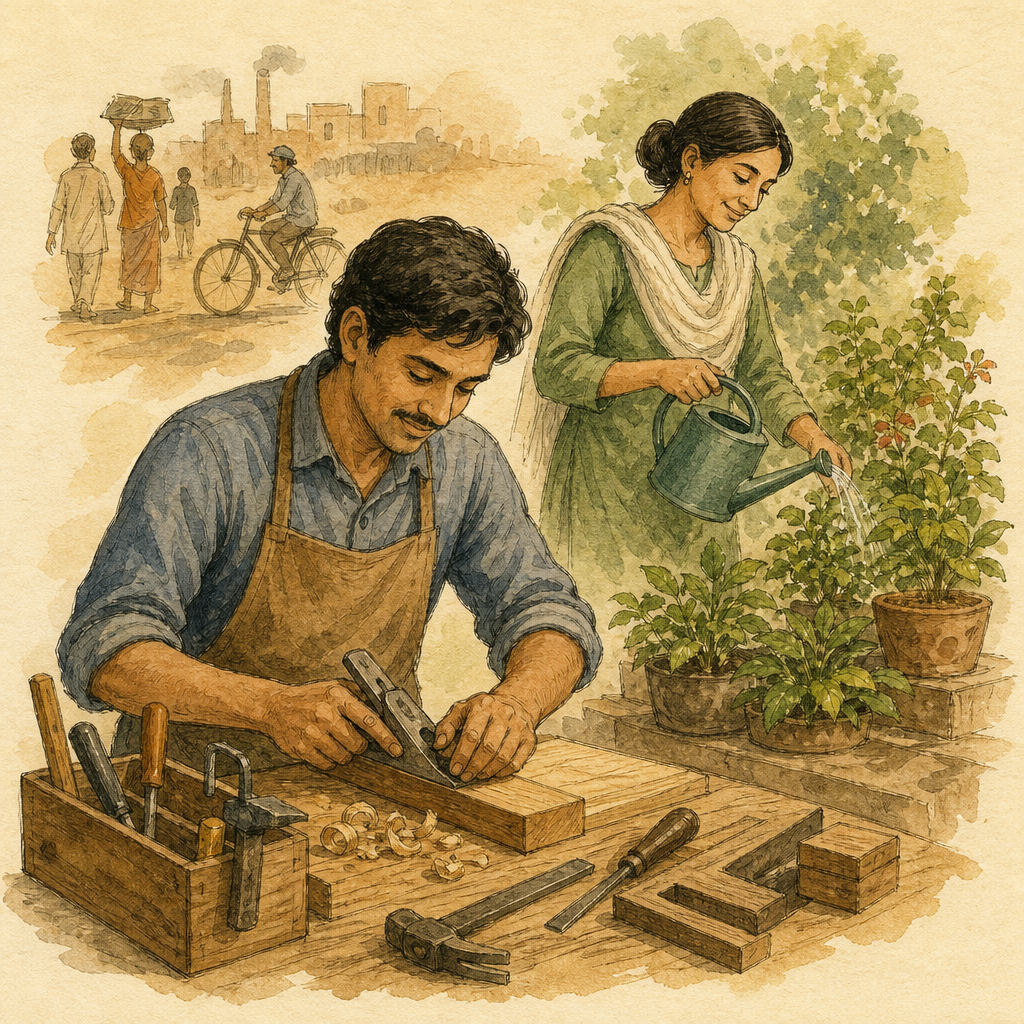
A Monday of Quiet Shifts
No single headline today screams for attention. A freezer gets hacked in seven countries. A 35-year peacekeeping mission in Western Sahara folds its tents. An editor in Cairo is fined into silence. Diplomats in Doha try, again, to keep a region from sliding into war.
None of this trends like a jet crash or a bomb threat. But look closer, and a single question runs underneath all of it: who shows up to do the unglamorous work that keeps a society upright, and what do we owe them in return?
The Table With No Camera
Qatar is reportedly hosting talks to keep the Gulf from tipping into a wider confrontation with Iran, even as the region braces for the possibility that talks fail. Nobody will build a monument to a war that did not happen. Diplomacy's great curse is that its successes are invisible — a crisis you never hear about, because someone spent a weekend in a windowless room preventing it.
That is dignity of work in its purest form: labor performed for people who will never know your name, with no guarantee of thanks even if it succeeds. It is worth noticing on purpose, precisely because the news cycle will not notice it for you.
When Contribution Is Punished
In Cairo, the independent outlet Mada Masr has been shut down and its editor, Lina Attalah, fined, after years of reporting that many governments would rather not have reported. Whatever one's view of any single story, the pattern is worth a plain question: what happens to a society that fines the people who do the unglamorous civic work of checking power?
Journalism, done honestly, is a trade like any other — it requires showing up, verifying, and publishing even when it is inconvenient to someone with handcuffs. A government that fines this work rather than merely disagreeing with it is not managing a nuisance. It is removing a load-bearing wall and hoping the house stands anyway.
Contribution and Its Price Tag
Meanwhile Ryanair says it may freeze workers' pay even as it raises airfares. Nobody is torturing anyone here; this is an ordinary corporate squeeze, repeated in a thousand companies every quarter. But it is worth asking the same question of capitalism that we ask of states: if the people who load bags, fly planes, and answer phones are the ones whose work makes the fare possible at all, does "contribution" mean anything if it is never rewarded in proportion?
Dignity of work is not only a virtue we demand of citizens — show up, contribute, don't freeload. It is also a demand citizens may fairly make of employers and states: reward the contribution you ask for.
The Mission That Ends Without a Victory
After 35 years, the UN's peacekeeping mission in Western Sahara is closing, with the underlying dispute still unresolved. By the scoreboard of "did it fix the problem," it is a failure. But peacekeeping was never only about fixing problems; it was about buying decades without renewed war, which is itself a form of contribution that resists applause because nothing dramatic happened on its watch.
And Those Who Cannot
None of this is an argument that only the productive deserve dignity. People fleeing under a shaky ceasefire, families bracing for an Ebola outbreak, retirees stranded on a cruise they can no longer afford to finish — these are not freeloaders, they are neighbours caught by circumstance. Neighbourliness, done honestly, means two things at once: contribute when you can, and extend compassion without demanding proof of usefulness from those who cannot.
The diplomat, the fined editor, the baggage handler, and the blue-helmet soldier all did shifts nobody claps for. The least the rest of us can do, on an ordinary Monday, is notice.