The test no strongman wants
Here is a quiet experiment you can run on any country, any week: something goes wrong at the top, or near it. Then watch the clock.
In France this week, a teenager lost a hand to a stun grenade during student protests. Within days, the interior ministry suspended the device's use. You can argue the grenade should never have been deployed near teenagers in the first place — that argument is fair and necessary. But notice what also happened: a free press reported it, officials did not deny it, and policy moved. That sequence — harm, scrutiny, correction — is not nothing. It is, in fact, most of what democracy is for.
Compare the clock running in Sri Lanka, where the former first lady has just been arrested over alleged misuse of donations meant for a children's hospital. Years after the fact, perhaps. Slower than anyone would like, certainly. But the arrest happened in public, under named charges, with courts that can be watched. A dictatorship does not need to arrest its first ladies; it simply forgets the donations were ever missing.
The harder clock
Three years on from the 7 October attacks, Israelis are still working through reports that Netanyahu's government had been warned beforehand. This is not a comfortable anniversary for any government to sit through, least of all while kibbutz residents are still deciding how, or whether, to rebuild homes that were destroyed. But ask yourself what the alternative looks like. A country that cannot ask its own leadership hard questions about warnings ignored is not sparing itself pain — it is postponing it, usually onto the next set of families. The discomfort of an open inquiry is the price democracies pay instead of the larger bill authoritarian systems hand to their citizens later, in silence.
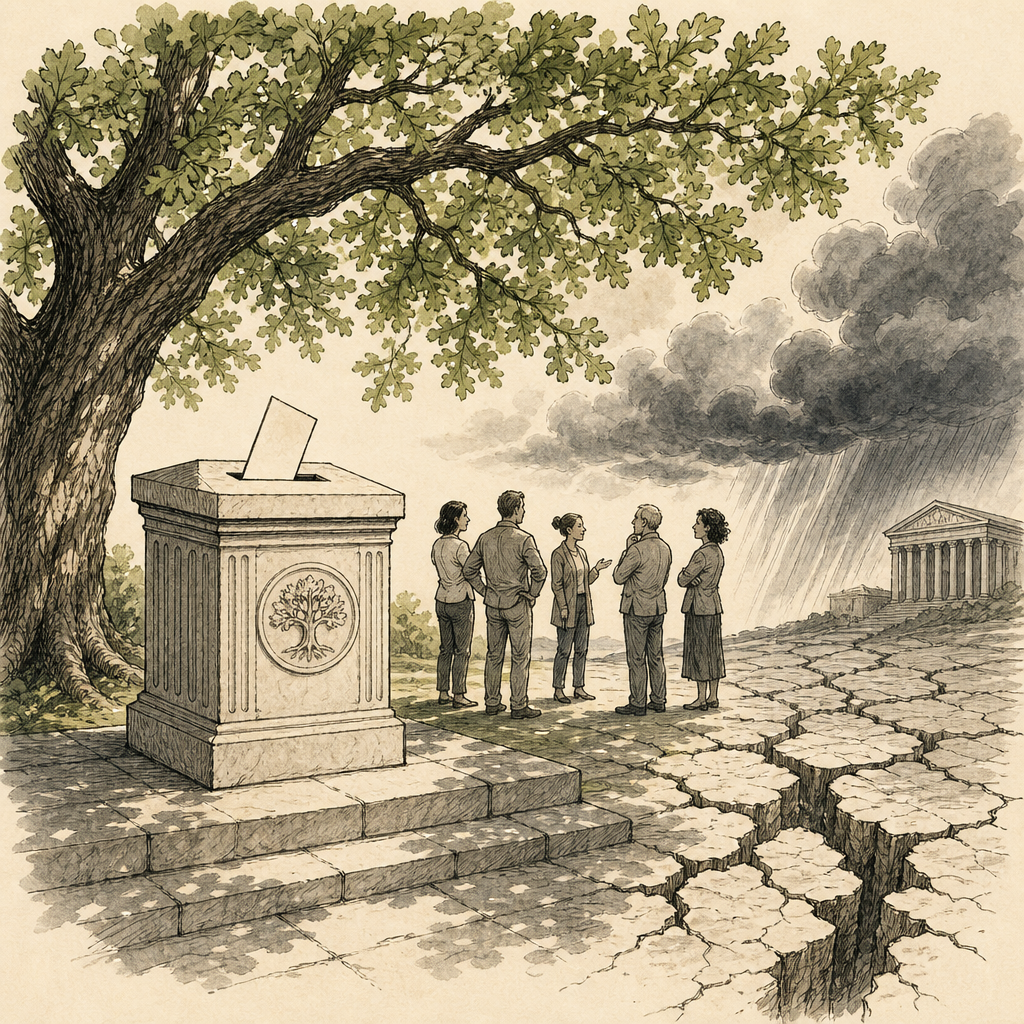
That is the pattern worth training your eye on, long before anyone reaches for the word "dictatorship." Not the scandal itself — scandals happen everywhere, under every flag. The tell is whether the scandal is allowed to surface, argued over, and acted upon, or whether it is quietly buried under a press that has learned not to ask, a court that has learned not to rule, a parliament that has learned not to vote against the executive.
Leader-to-leader, over everyone's head
It is worth noticing, too, when accountability skips the institutions entirely and becomes a phone call between two men. This week brings word that Trump intends to speak to Putin personally about the death of a plague-lab worker in Russia. Perhaps something useful will come of it. But pause on the shape of the thing: a matter that in any functioning state would run through investigators, ministries, perhaps a parliamentary question, is instead to be settled strongman to strongman, over a phone line, above the paperwork. It is efficient, certainly. It is also exactly how institutions atrophy — not by a coup, but by leaders discovering it is simpler to just call each other.
Why the slow way is the wise way
None of this is an argument for bureaucracy as a virtue in itself — a citizen crushed under forms is not safer than a citizen crushed under a boot, only more bored about it. The argument is narrower: keep the channels open through which a government can be told, publicly and on the record, that it was wrong. A stun grenade banned, a first lady charged, a prime minister questioned about a warning — these are not signs a country is falling apart. They are signs its immune system still works.
The moment to worry is not when the scandal breaks. It is the week after, when you check whether anyone was allowed to ask about it, and the courts and the cameras are still there to answer. That week, more than any election, tells you what kind of country you are standing in.