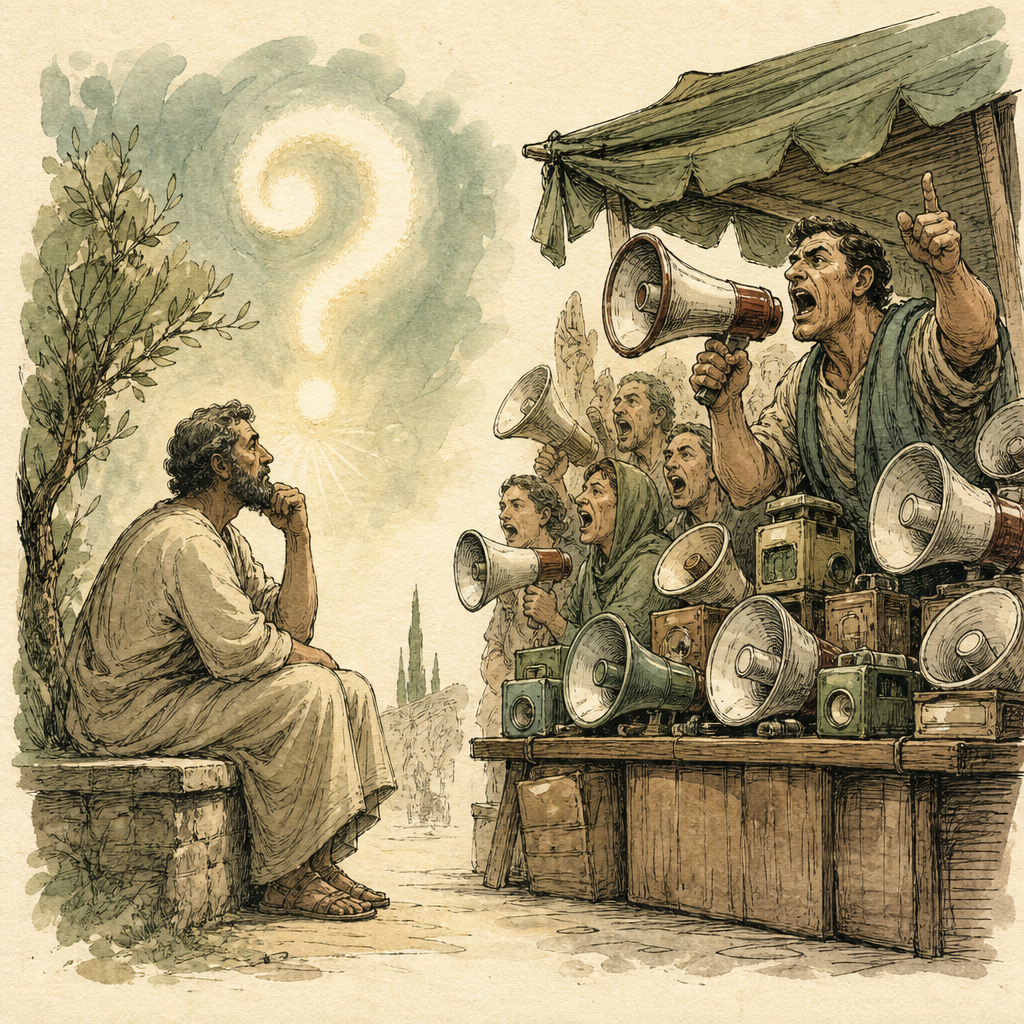
The Market of Sure Things
Imagine a market square with many stalls. Most sell vegetables, shoes, gossip. But one stall, always the loudest, sells something rarer: certainty. Buy this answer, it says, and you need never doubt again. This week the square was especially busy.
In Serbia, a stall had been open a very long time. Its keeper, Aleksandar Vučić, had sold the same product for years: the certainty that no one else could run the country, that protest was noise and he was the only adult in the room. On Sunday, after months of student-led demonstrations, voters finally asked the one more question the stall never wanted: "compared to what, exactly?" The answer cost him the election. Common sense, it turns out, is patient. It does not storm the stall. It simply keeps asking until the seller's confidence runs out of stock.
Comebacks and Runoffs
In Brazil, Lula won a fourth term after a campaign some foreign commentary framed as a referendum on "U.S. influence in Latin America," as though Brazilians were pawns choosing between two outside certainties rather than citizens weighing their own ballots. That framing deserves its own Socratic question: whose certainty was actually on the table — Washington's, or the 200 million people who went to vote? A messy, dramatic, WhatsApp-fuelled comeback is not tidy. But tidiness was never democracy's selling point. Its selling point is that no result is final; next time, the stall opens again.
The Stall That Refuses the Question
Compare that with Beijing this week, where Xi Jinping's plenum is reported to be seeking "stronger party discipline." Discipline is a fine word when it means showing up on time. It is a different word when it means that only one voice gets to ask questions at all. A system that forecloses the follow-up question isn't confident — it's simply unaudited. Common sense does not need to shout this down. It only needs to notice: the quieter a system keeps its citizens, the louder it must advertise its own certainty, because no one else is allowed to check the math.
The Honest Vendor, Selling Anyway
And then there is a stranger case: Anthropic, days before a blockbuster share listing, publicly warning of "catastrophic risk" from the very technology it is about to sell shares in. Give credit where it's due — that is more candour than most industries manage before an IPO. But candour is not the same as resolution. A vendor who says "this might be dangerous" while still ringing up the sale has asked the question out loud, which is rare, and then answered it with a shrug, which is not reassuring. The useful response isn't panic and it isn't applause. It's the plain follow-up: if the risk is catastrophic, who exactly is responsible when it arrives, and what happens to the share price then? A company brave enough to name a risk should be bold enough to say what it will do about it — not just that it noticed.
What Common Sense Actually Buys
So here is where the week's threads meet. Certainty is a seductive product because it ends the tiring work of thinking. Common sense is less glamorous: it is the habit of asking one more question before the purchase is final. In Serbia and Brazil this week, that habit worked — imperfectly, loudly, through protest and ballot and messy coalition politics, but it worked. Where the habit is suppressed, as the plenum's language suggests, certainty gets to keep its monopoly a while longer.
The lesson travels well beyond these two countries. Any stall selling you a final answer — about a ruler, a market, or an algorithm — deserves the same small test. Not outrage. Not applause. Just the next question. If the seller welcomes it, buy with confidence. If the seller flinches, that flinch is the only answer you need.