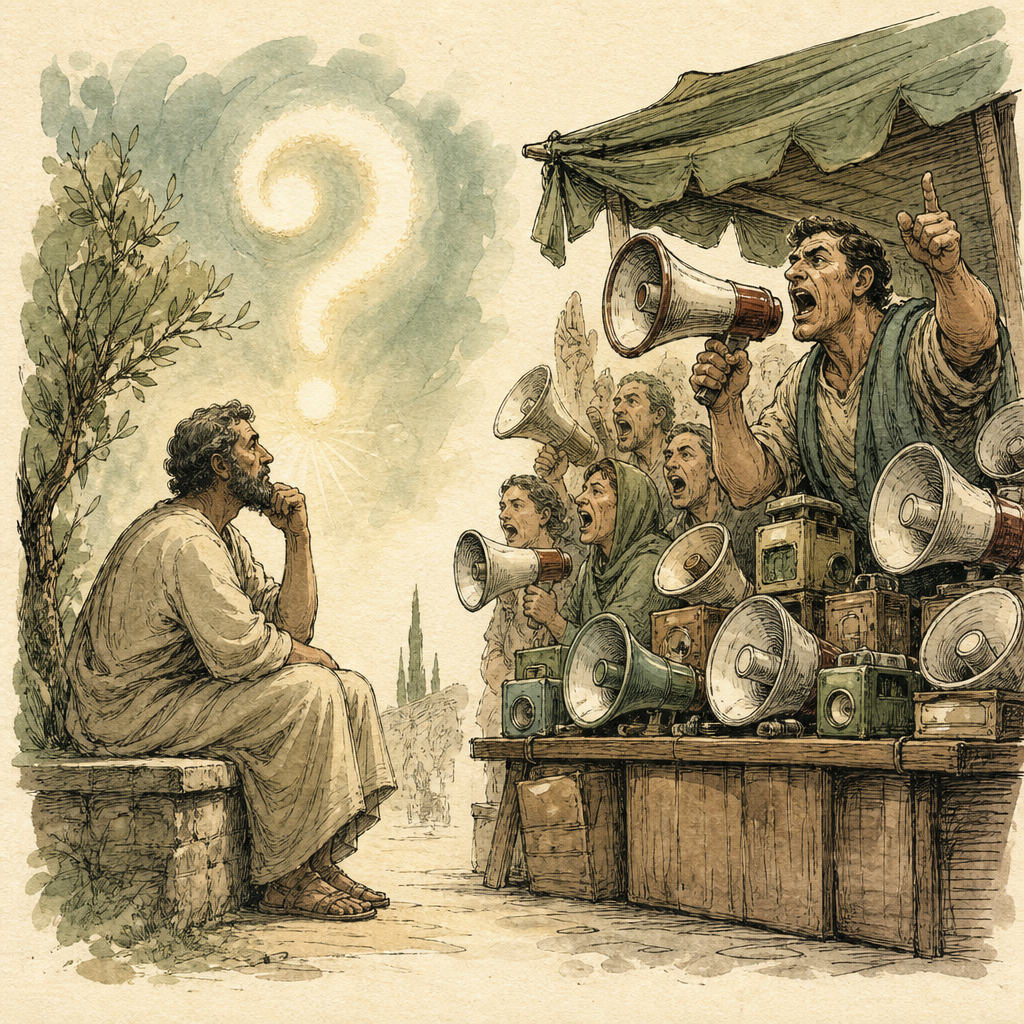
The Stall That Sells One Hundred Percent
Every market has one stall like this. The seller does not haggle, does not hedge, does not entertain a follow-up question. He simply says: absolute. Take it or leave it.
Today the world's marketplace has several such stalls open at once, and it is worth walking past each one slowly, because the loudest promise is rarely the most useful.
"One hundred percent"
Manchester's mayor Andy Burnham said this week that the UK supports Ukraine "100%," after Russia issued a drone warning. It is a fine sentence to say out loud. It is also, if we are honest, a sentence that means nothing until someone asks the next question: 100% of what, exactly? Of moral sympathy, certainly — that is cheap and always available. Of air-defence stock, of artillery production lines, of political patience through a third winter of strikes that, this week alone, killed at least six people on the Russian side of an aerial exchange that runs both directions now — that is a different ledger entirely, and it does not round so neatly to a whole number.
This is not a case against solidarity. It is a case against solidarity dressed as arithmetic. A democracy that actually means it says: here is what we will send, here is what it costs, here is how long we can sustain it, and here is the vote that authorises it. A democracy that only means the applause says "100%" and moves to the next question at the press conference.
The funeral that must not be noticed
In China this week, the state is holding a funeral for a former premier while quietly limiting how visibly the public may mourn him. This too is a certainty stall — the certainty of a single, tidy narrative about what a leader meant, sold to a population not permitted to compare notes on what he meant to them. Grief, like elections, gets dangerous to an authoritarian habit the moment it is allowed to be plural. One version, agreed in advance, filed under "respect." Ask the next question — why does public sorrow need a script? — and you have already located the seam where the fabric was stitched too fast.
The deadline that expired quietly
Meanwhile Washington and Tehran let a peace-talks deadline pass without either side blinking, each certain the other bears the blame, each deadline itself a kind of theatre of false precision — as if diplomacy obeys a calendar the way a mortgage does. Deadlines can be useful. They can also be a way of pretending a messy, human, negotiated thing has the clean edges of a due date, so that missing it becomes someone's fault rather than everyone's slow work still unfinished. The honest question is not "who missed it" but "was the deadline ever the right instrument for this problem."
What the loud stalls have in common
A statement of total solidarity, a script for national grief, a diplomatic deadline treated as gospel — each one sells the comfort of not having to think further. And each is standing in the same market as events that refuse any tidy certainty at all: a boat capsized off Zimbabwe with dozens dead, an Ebola outbreak now the deadliest in Congo's history, families in Ceuta and the West Bank simply trying to keep the roof they already have. These stories do not fit a slogan. They resist the whole aisle of absolute answers, and that resistance is itself instructive.
Common sense is not cynicism. It does not doubt everything equally; that would be its own kind of laziness, indistinguishable from despair. It asks one more question of whoever is loudest, because the loudest stall in any market is the one that most needs you not to ask it.
So: 100% of what. A script written for whose comfort. A deadline serving which clock. Ask, and keep the change.