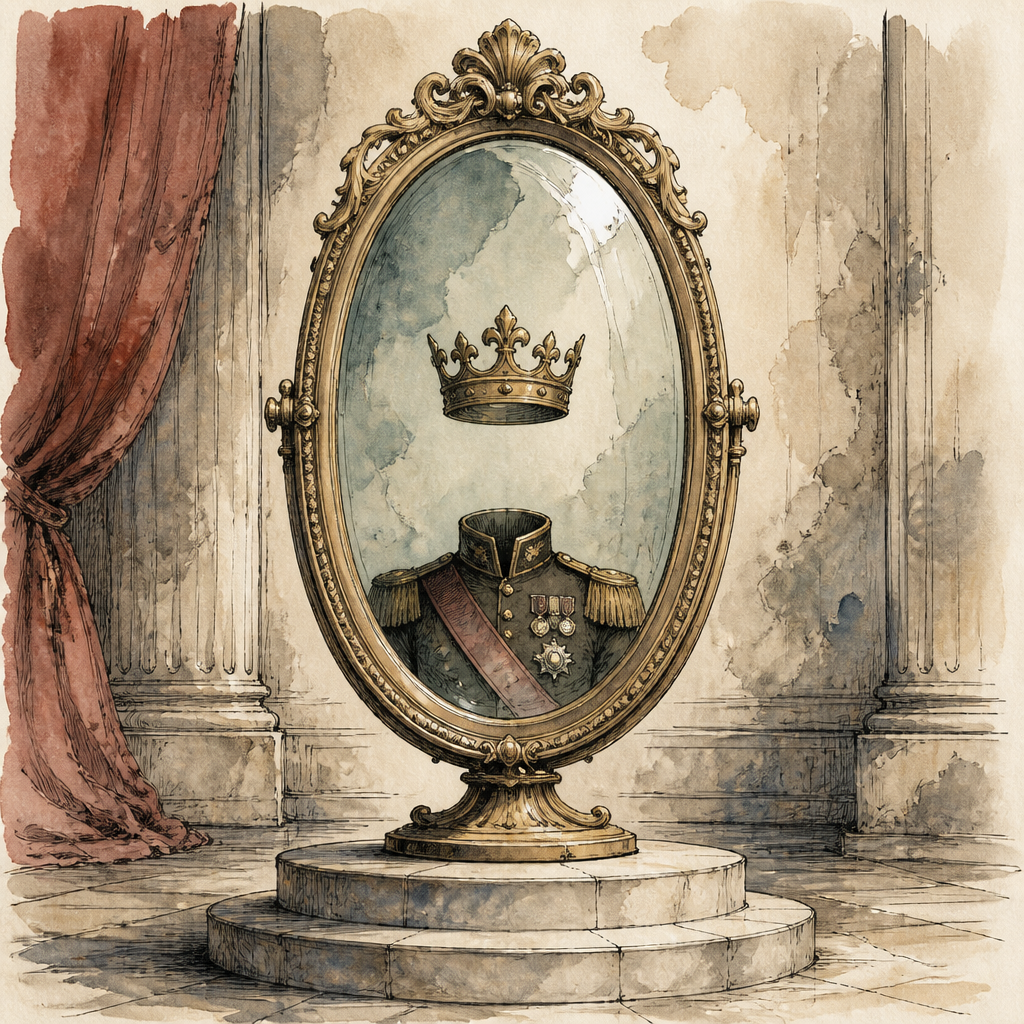
A Satellite Remembers Who Owns It
Somewhere above Ukraine this week, a constellation of satellites did what its owner told it to do. Elon Musk confirmed that SpaceX had restricted Starlink service to Ukraine, then restored it. The service came back. The lesson did not.
Here is a useful thought experiment. Imagine a national electricity grid that worked beautifully, except that one shareholder, on a bad morning, could dim a city because a tweet displeased him. We would call that a scandal. When it happens to a wartime communications network relied on by soldiers, hospitals, and air-defence coordination, we call it, apparently, Tuesday.
This is not really a story about Musk's politics, which are loud enough to need no further amplification here. It is a story about infrastructure that millions depend on, resting on the private judgment of one person who answers to no electorate and no treaty. A democracy that outsources a critical lifeline to a single owner's discretion has, quietly, built itself a small monarchy inside its own war effort. The mirror does not flatter.
An Ear, and a Crossing Closed on Election Day
Elsewhere this week, the mirror shows a more familiar face. Reporting continues on why a far-right cabinet minister in Israel holds such sway over Benjamin Netanyahu's governing choices — and, separately, that Israel plans to close West Bank crossings on election day as a crackdown escalates. Put those two facts side by side and a pattern appears, the oldest pattern in the authoritarian playbook: borrow legitimacy from an election while narrowing who gets to take part in the next one.
A leader who needs the most extreme voice in his coalition to stay in power is not, whatever the branding says, the strongman of the story. He is a man standing on a smaller and smaller platform, built by people more certain than he is. Certainty, it turns out, is the currency strongmen trade in — and the trouble with borrowing currency from the most certain people in the room is that they eventually want it back, with interest.
What the Crowds Keep Reminding Everyone
And yet the same week offers a second mirror, and this one is more honest. Serbia reports record-high turnout in its elections. Soldiers guard the centre of Milan while thousands march in cities across Europe. France, again, fills its streets. None of this is tidy — protest rarely is — but all of it says the same unglamorous thing: power that forgets it is borrowed eventually meets people who remember.
It is tempting to read mass protest as instability. It is wiser to read it as maintenance. A democracy that nobody bothers to march for is not calm — it is unattended. The turnout in Serbia and the crowds in Italy and France are not noise competing with the strongman's certainty; they are the sound of citizens doing the job no satellite owner and no coalition minister can do for them: insisting that power answer to the people it claims to serve, on a schedule the people set, not the leader.
The Honest Question
So here is the question worth sitting with, without shouting it: when did we get so comfortable letting single men — elected or merely wealthy — hold switches that belong, by rights, to everyone they affect? Not because any one of them is uniquely villainous. Ordinary vanity is enough. The point of distributing power across institutions, redundant systems, and genuine elections was never to insult any particular man's character. It was to stop needing to trust it.
The practical answer is almost boring: build redundancy into critical infrastructure so no single owner can dim it on a whim; keep election-day access open rather than selectively narrowed; and treat a crowded square, like Belgrade's polling stations or Milan's avenues, not as a threat to order but as order's actual engine room. None of this requires heroism. It requires noticing early — before the switch becomes permanent, before the crossing stays closed, before certainty finishes eating the room. The mirror is already up. The only remaining question is whether we keep looking at it.