A crowded street, a crowded conscience
In Ceuta this week, hundreds of people who crossed from Morocco are neither inside nor outside anything. Not quite in Spain, not quite anywhere else. The local leader calls it an atrocity. Morocco says it bears no responsibility. Brussels, watching the toll near a hundred dead, calls for stronger borders. Everyone is right about something, and no one is answering the actual question: who is welcome, and on what terms?
It is worth noticing how familiar this shape is. A Nigerian man packs a bag and leaves South Africa, leaving his wife and twins behind, because the streets there no longer feel like his to walk. Cubans, finding the American door closing, now queue for Brazil instead. None of these people chose exile as a hobby. They chose it the way anyone chooses a locked door over a burning room.
The honest case for borders
Let's not pretend borders are only cruelty wearing a uniform. A state that cannot say who enters, and under what rule, is not generous — it is simply absent. Von der Leyen's call for "stronger borders" is not, by itself, the villain of this story. Reciprocity cuts both ways: a society that cannot control its gates cannot promise safety, services, or dignity to anyone inside them either, including the migrants already there. Sustainable solidarity is not unlimited solidarity; pretending otherwise helps no one, least of all the next arrival who finds the table already collapsed under too many demands made too fast.
So yes — orderly borders. Argue for them without blushing.
But orderly is not the same as invisible
Here is the contradiction worth sitting with: the same governments that insist on "stronger borders" often provide no visible legal path for the very people the border is meant to process. A wall answers the question "how do we stop arrivals" but not the question "what happens to the humans who already arrived, on our streets, in our custody, in our name?" Ceuta's migrants are not, this week, being smuggled anywhere. They are standing in a Spanish town in daylight, in limbo, waiting for an answer nobody in Rabat or Madrid or Brussels seems eager to give first.
That limbo is the real headline, more than the border-strengthening statements that will follow it. A person left standing between two governments, each pointing at the other, is not a security problem to be solved by fencing. It is a dignity problem to be solved by someone actually deciding.
What the shared table requires
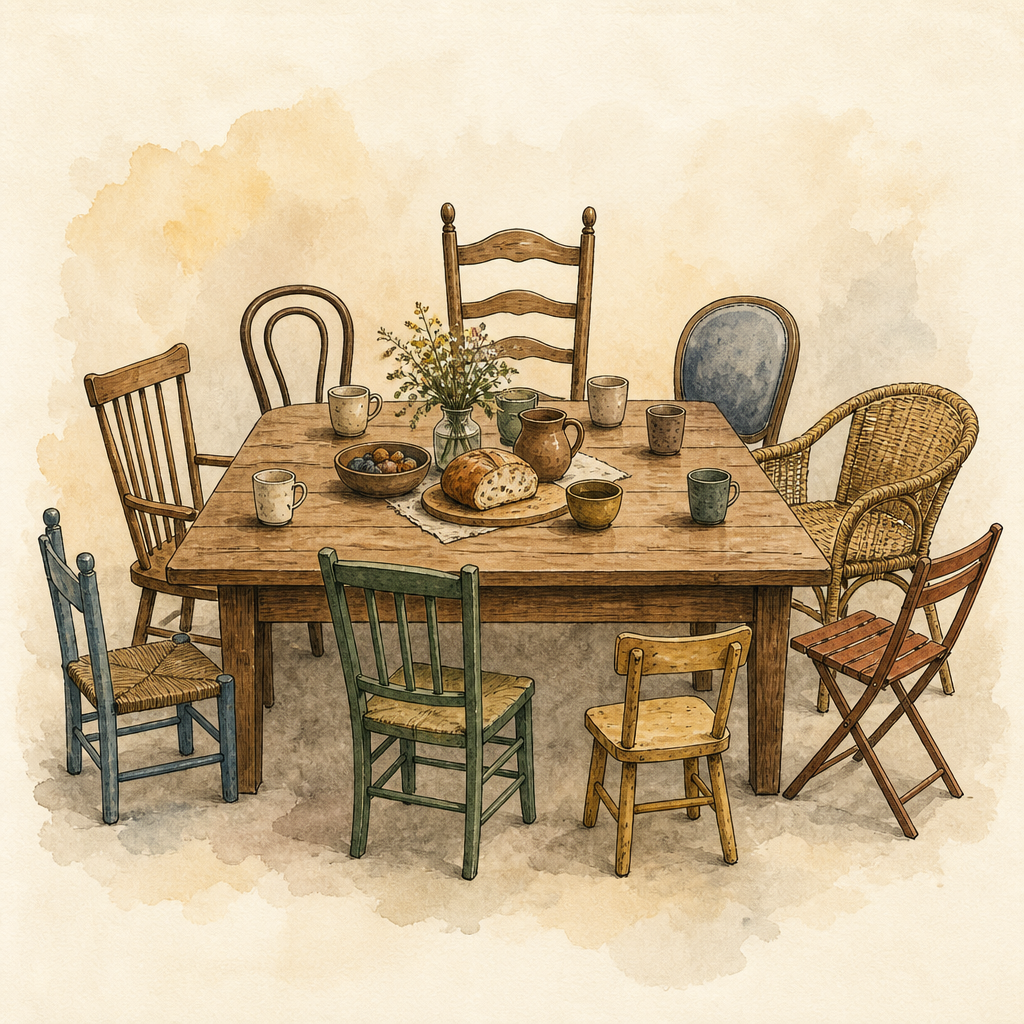
A shared table has two disciplines, not one. It has rules about who sits down and when — that is the border, and it is legitimate. But it also has an obligation, once someone is standing in the doorway, hungry and real, to say something other than "not my problem" or "go back where you came from," especially when where they came from is itself disputed.
Europe does not need to choose between order and humanity. It needs to stop pretending the choice is required. Process claims quickly. Say clearly who qualifies and who does not, and act on it without endless limbo. Hold Morocco and Spain to the same standard you'd want applied if your own family were the ones standing at that fence at 3 a.m.
The golden rule does not soften at a border crossing. What you would not want done to you — waiting nameless in a street while officials trade blame — you should not do to them. That is not softness. It is the minimum bar for a democracy that still wants to call itself one.