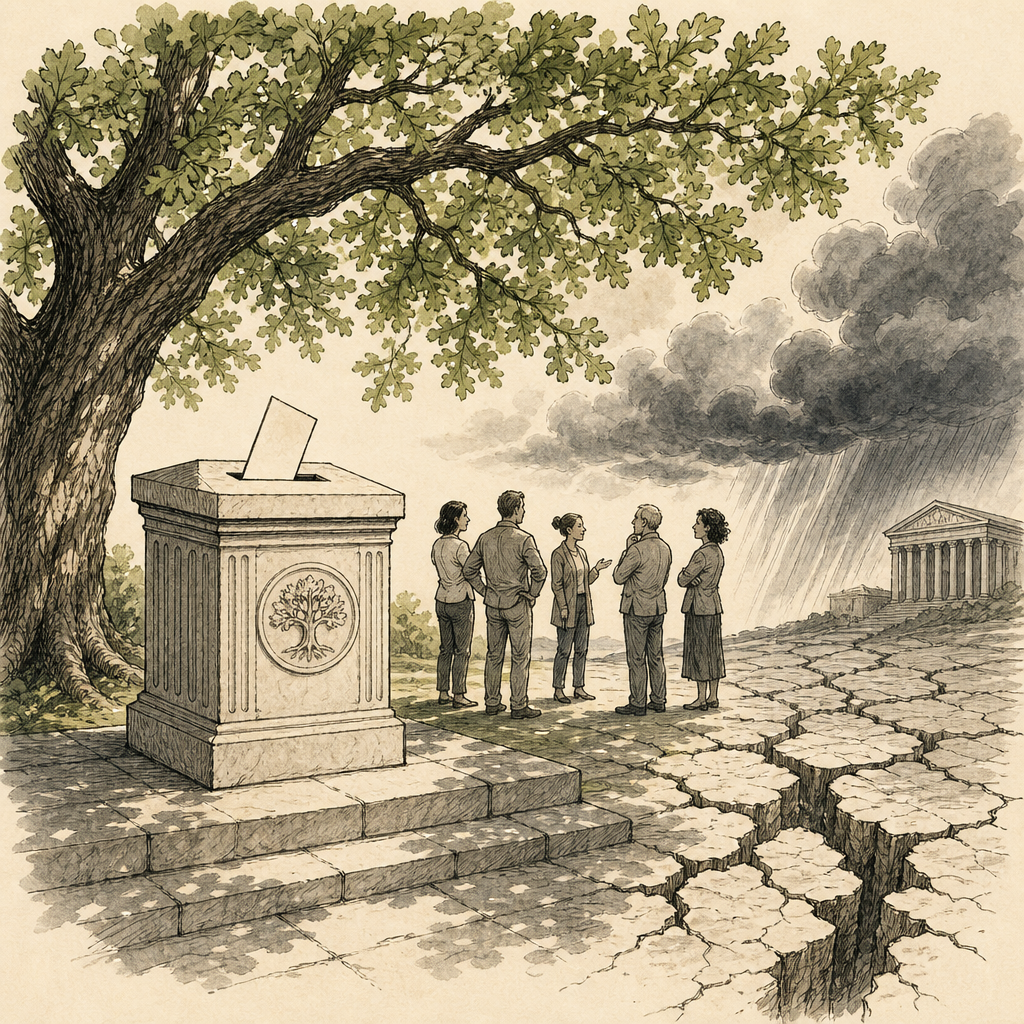
A Minute of Grace
Somewhere in Ukraine on Monday, a train left a station carrying Boris Johnson and a handful of European officials. Shortly after, a Russian strike hit that same station. Near the Ukraine–Poland border, a similar pattern repeated: a drone found a train soon after dignitaries had passed through.
Was it coincidence? Perhaps. War produces coincidences the way peace produces traffic jams — constantly, and mostly ignored. But notice what such near-misses do to the mind of anyone who might one day consider visiting, reporting from, or standing in solidarity with a country under attack: they teach hesitation. They make solidarity feel like a gamble rather than a duty. That, whether by design or accident, is the real cargo those trains carry — a lesson in fear, delivered free of charge.
Democracies should notice this pattern early, not because every timing is a message, but because authoritarian pressure specializes in exactly this ambiguity. Was it a warning? You will never quite know. That uncertainty is the tool.
The Boring Miracle of Sweden
Compare that with Sweden this week, where a left-wing bloc holds a narrow lead in an election too close to call. No tanks outside polling stations. No sudden resignations. No convenient train delays for the losing side. Just counting, recounting, and citizens waiting for numbers to settle, the way people wait for a kettle to boil.
It is almost embarrassingly undramatic. Which is precisely the point. A democracy under no threat produces the dullest headlines in the world: close vote, patience, result. A democracy under threat produces the opposite — sudden clarity, imposed unity, an election that ends before it properly begins. Boredom, in this context, is not the absence of stakes. It is the presence of trust that the process itself will hold.
When Criticism Gets Deflected Instead of Debated
A quieter but related habit shows up in Beijing's response to a Western tech executive's warning about the pace of Chinese AI development. Rather than engage the substance — is the concern fair, exaggerated, self-serving? — the reply was to call the framing itself "malicious," a familiar move: recast scrutiny as hostility, and the conversation ends before it starts.
This is not unique to any one government, and open societies do their own version of it too, usually less skillfully. But the instinct to answer a hard question by attacking the questioner, rather than the question, is one of the oldest tells of a system that would rather manage opinion than survive debate. A healthy institution — a court, a newsroom, a parliament — invites the uncomfortable question in and lets it wander around the room. A brittle one escorts it to the door.
Why Patience Is the Wiser Bet
It would be easy to conclude that fear is efficient and patience is naive — that the strongman's shortcut beats the ballot's slow shuffle. History suggests otherwise, at a cost measured in generations rather than news cycles. Systems built on intimidation must keep escalating the intimidation to stay convincing; systems built on counted votes only need to keep counting.
So the wise position is unglamorous: keep the courts boring, keep the elections close and countable, keep criticism answerable rather than punishable, and treat every unexplained "coincidence" near a border as a reason for more attention, not less. None of this guarantees safety. It only guarantees that when the danger is real, someone was still watching closely enough to name it.
The train that left in time was lucky. A society that only relies on luck is not a democracy — it is a democracy in waiting.