A Courthouse, a Standoff, and a Question of Nerve
Police outside a courtroom are rarely a good photograph for a democracy. Yet there they are, this week, stationed around a dispute over who controls Poland's top court. The details are procedural, almost boring on the surface — appointments, mandates, who signs what. But underneath the boredom sits the oldest question a union of democracies can ask itself: what happens when one member's institutions start drifting, and the rest of the family has to decide whether to say something?
It would be easy for Brussels to treat this as an internal Polish matter, the way a family avoids a quarrel at dinner by discussing the weather instead. But the European Union was built on the idea that an independent judiciary is not a national preference, like a cuisine or a dialect — it is a shared floor everyone stands on. If the floor can quietly be removed in one room, the house is less safe for everyone else too.
A Newsroom Closes, and the World Notices How Loudly Nobody Objects
Meanwhile, in Cairo, an editor named Lina Attalah has been fined and her outlet, Mada Masr, shut down. It is the kind of story that travels fast through journalists' group chats and slowly, if at all, through foreign ministries. Europe trades with Egypt, cooperates with Egypt on migration, needs Egypt's cooperation in a volatile region. So the quiet question arrives: does a union that calls itself a community of democracies have a voice left over for inconvenient friends, or only for convenient enemies?
This is not a call for sanctions by breakfast. It is a smaller, sturdier ask: that European leaders who will happily cite Article 2 of their own treaties — the one about rule of law and fundamental rights — find it in themselves to mention press freedom in the same sentence as a trade meeting. Silence is also a foreign policy. It just doesn't look like one.
Who Gets to Lead the World's Institutions?
Add a third thread: Sudanese diaspora groups and human rights organisations objecting to a UAE nominee for a top United Nations post. Here too, Europe has a choice that is easy to dodge — vote quietly, avoid the headline, let the matter resolve itself in a corridor somewhere in New York. Or ask, out loud, whether the people who run the world's shared institutions should themselves answer to the standards those institutions exist to protect. A union of democracies that wants its vote to matter in these rooms should use it visibly, not just competently.
And a Virus That Does Not Carry a Passport
Then there is Ebola — more than five thousand dead in the deadliest outbreak the Democratic Republic of Congo has recorded, with a British health official warning it could reach the UK. Diseases are refreshingly honest about borders: they ignore them. A union that prides itself on solidarity inside its own fence should not need a case on its own soil before treating an outbreak abroad as urgent. Helping early, while it is still someone else's emergency, is cheaper in lives and in money than helping late, when it has become everyone's.
The Common Thread
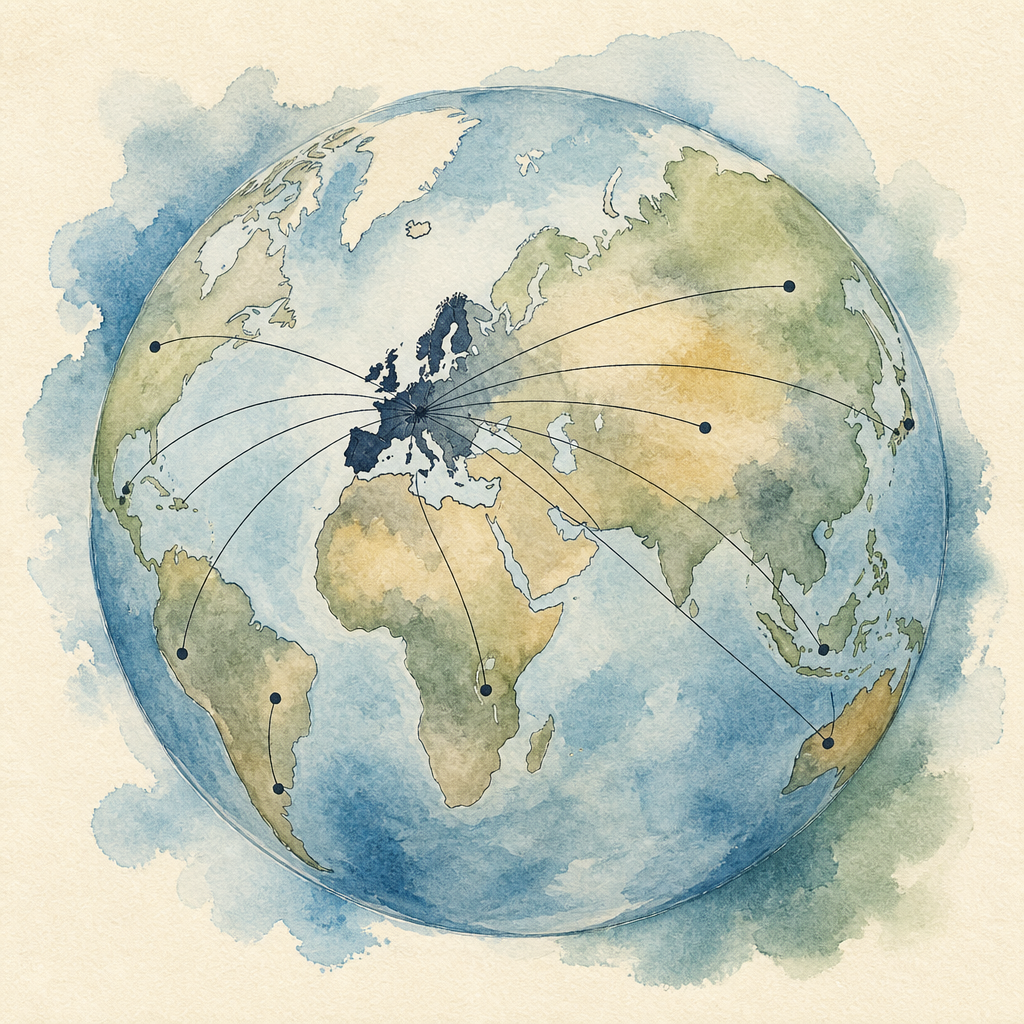
None of these four stories — a courthouse, a newsroom, a UN seat, an outbreak — made the same headline today. But they ask the same question from different angles: does cooperation among liberal democracies mean anything beyond trade statistics and summit photographs?
The honest answer is that it means exactly as much as members are willing to enforce at home and say out loud abroad. A union that polices its own courts, defends inconvenient journalists, votes its values at the UN, and treats a distant epidemic as everyone's business — that union has something worth exporting. One that does none of these consistently has only a flag and a currency, which is not nothing, but is not enough either.
Europe does not need to be the world's conscience. It only needs to be consistent enough that its conscience is believable.