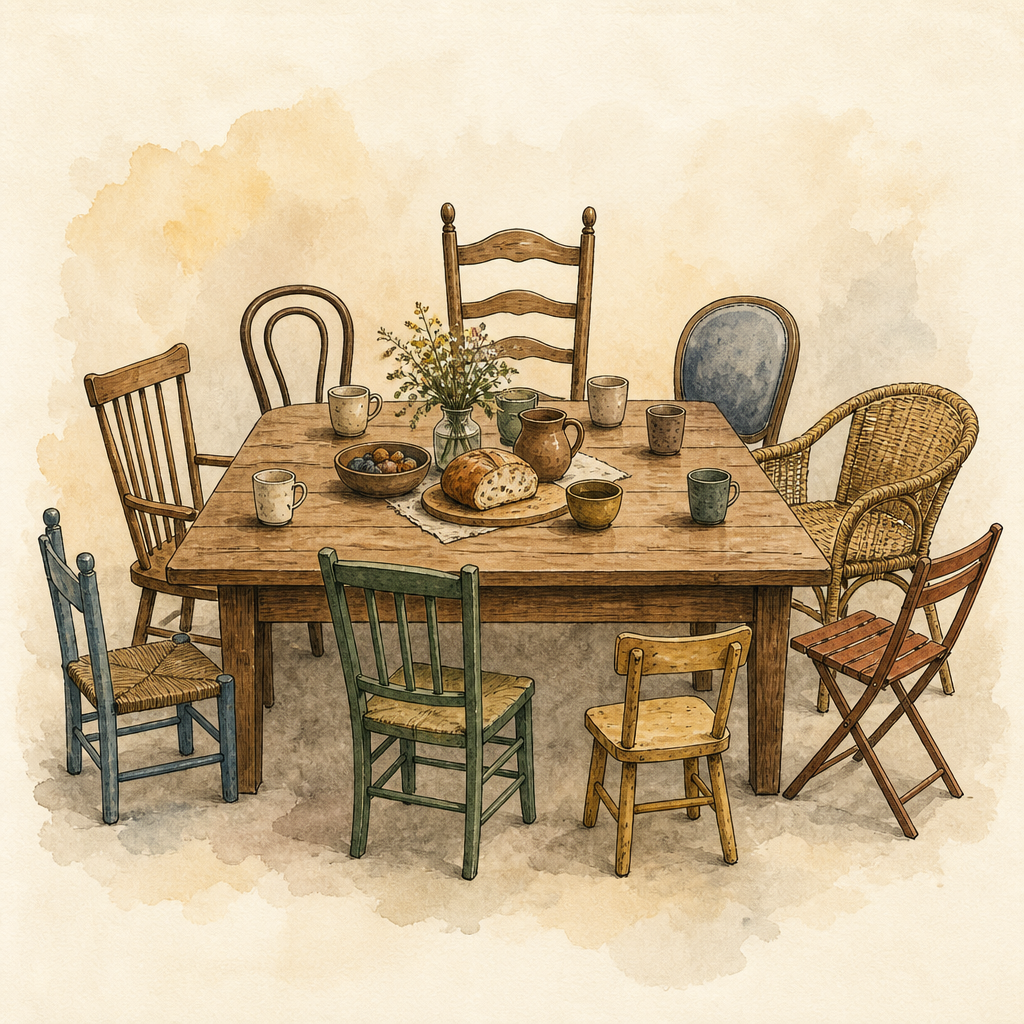
A Table With Missing Chairs
Imagine a table long enough to seat the whole human family. Some days the loudest argument at that table is between two wealthy neighbours over how big each slice should be. Canada and the United States are trading tariff blows this week, dollar for dollar, tit for tat, two G7 economies squabbling like siblings over the last piece of pie. It is a normal, almost healthy quarrel between democracies with courts, elections, and the patience to eventually shake hands again.
But walk a little further down that same table, and the chairs start to disappear.
Nine Years Standing at a Door
Nine years after fleeing Myanmar, Rohingya families are told, plainly now, to forget about going back. Nine years is long enough for a child born in a camp to become a teenager who has never seen the country on his own papers. A shared table does not mean everyone eats the same food. It means no one is told, indefinitely, that there is no place set for them anywhere at all. Statelessness is not a policy detail. It is the deliberate removal of a chair.
When the House of Prayer Becomes a Trap
In Nigeria, video has surfaced showing hundreds held captive after a mosque kidnapping. A mosque, like a church or a temple, is supposed to be the one room in a town where the table is set widest — strangers welcomed, differences set aside for an hour of shared quiet. When that room becomes a hunting ground instead, something more than a crime has happened. The very idea of sanctuary has been robbed, and every worshipper anywhere is a little poorer for it, whatever their creed.
The Table Built on a Landfill
In Guinea's capital, a landslide at a waste mound has killed thirty people, the government says. People do not choose to live and scavenge on a mountain of other people's garbage for entertainment. They do it because no other table was offered. A society that lets its poorest citizens build their kitchens on a landfill has not run out of compassion by accident; it has run out of it by neglect. Compassion has limits, yes — no nation can promise unlimited solidarity. But a landfill is not a limit. It is an absence of will.
Who Gets to Squabble Over Coins
Here is the uncomfortable comparison worth sitting with: Canada and the United States can afford a trade war precisely because their tables are already full. Tariffs are the argument of the well-fed. Meanwhile a mosque in Nigeria, a camp on the Bangladesh border, and a rubbish mountain in Conakry are the argument of the excluded — an argument no one gets to have out loud, because the table was never set for them to begin with.
Setting the Table Properly
Human rights and anti-racism are not abstractions to be recited at summits. They are the daily discipline of asking, in your own street and your own country: who is welcome here, and who is quietly left standing? The golden rule is not complicated — what you would not wish done to your own child should not be shrugged off when it happens to someone else's, whether in a camp, a mosque, or a landfill.
A shared table does not require pretending every guest is the same, nor does it require every guest to abandon who they are. It requires shared rules at the table — the same law, the same floor of dignity, the same refusal to let any group build a permanent camp outside the door, whether that exclusion is imposed by a state or chosen by a closed community that refuses the common table altogether.
Set enough places, and even a good argument over the last slice of pie stays what it should be: a quarrel among people who already know they belong.