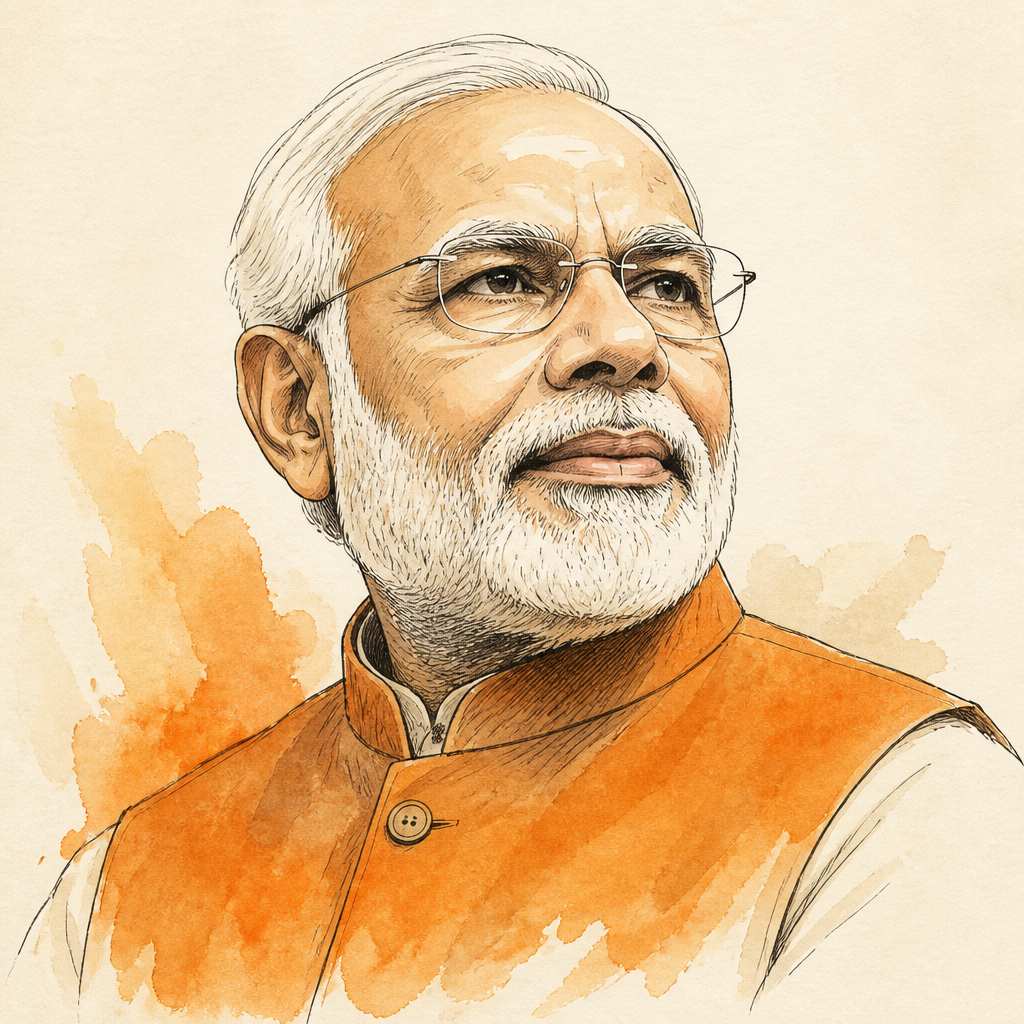
A week of broken trust
Today's headlines read like a syllabus on institutional failure. Spain accuses fellow EU states of a "selfish" response to tens of thousands crossing at Ceuta, with the death toll from the crisis climbing past sixty. UEFA says it has "lost confidence" in FIFA's leadership. A Peruvian ex-president walks free after a corruption sentence is overturned. Russian missiles fall on Kyiv again. A settler in the West Bank tells a reporter, on camera, that revenge justifies attacking civilians.
None of these stories is about India. And that, oddly, is the point.
Who gets to sit at the table
The institutions built after 1945 — the UN Security Council chief among them — were designed for a world where five victors held the pen. Eighty years on, the country with the most people, the most voters, and one of the largest economies on Earth still has no permanent seat at that table. India's diplomats have made this case for decades, politely, at every G20 and UN podium available. It is, on its own logic, a reasonable ask. A club claiming to represent humanity should not seat a quarter of humanity in the visitors' gallery.
And the alternative arrangements are not inspiring confidence. Watch UEFA publicly distrust FIFA. Watch Spain accuse its own union of selfishness while people drown crossing a fence. These are not signs of institutions functioning well without India; they are signs of institutions functioning poorly with the current membership. A larger, more representative table is not a favour to India — it may be a repair to everyone else.
But representation is a mirror, not just a door
Here the irony sharpens. A country asking the world to widen its circle of legitimacy might reasonably be asked, in turn, how it treats legitimacy at home. Narendra Modi has governed India as the most dominant figure in its democratic history — commanding rallies the size of small nations, a media landscape where dissent finds fewer open channels each year, and a style of leadership that increasingly personalises the state itself. None of this makes India a dictatorship; elections happen, courts still rule against the government on occasion, opposition parties still win state after state. But personality and permanence have a way of creeping toward each other in every democracy, from Washington to Moscow to New Delhi, and the creep rarely announces itself with a knock on the door.
So the honest question is double-sided. Should India have a permanent seat at the world's most important table? Very likely yes — a world of 1.4 billion voters is not adequately represented by a 1945 seating chart, and the alternative, as this week shows, is not a well-run status quo but a status quo failing its own members. Should that seat come with no scrutiny of how power concentrates in New Delhi, how minorities are treated, how a free press fares under pressure? No — the same standard that indicts a settler's casual justification of revenge, or a union that no longer trusts its own federation, must apply to every capital that asks for more say in how the world is run.
The stance
Widen the table. Reform the Council, invite India in as a full stakeholder, and stop pretending 1945's arithmetic still describes 2026's population. But representation is not a blank cheque. The world should welcome India's seat and keep asking India's own citizens the same question it asks of every democracy watching its leader's shadow grow long: are your institutions still checking your strongman, or merely applauding him? A bigger table is only worth building if everyone sitting at it, including the newest chair, keeps room for the people who disagree.