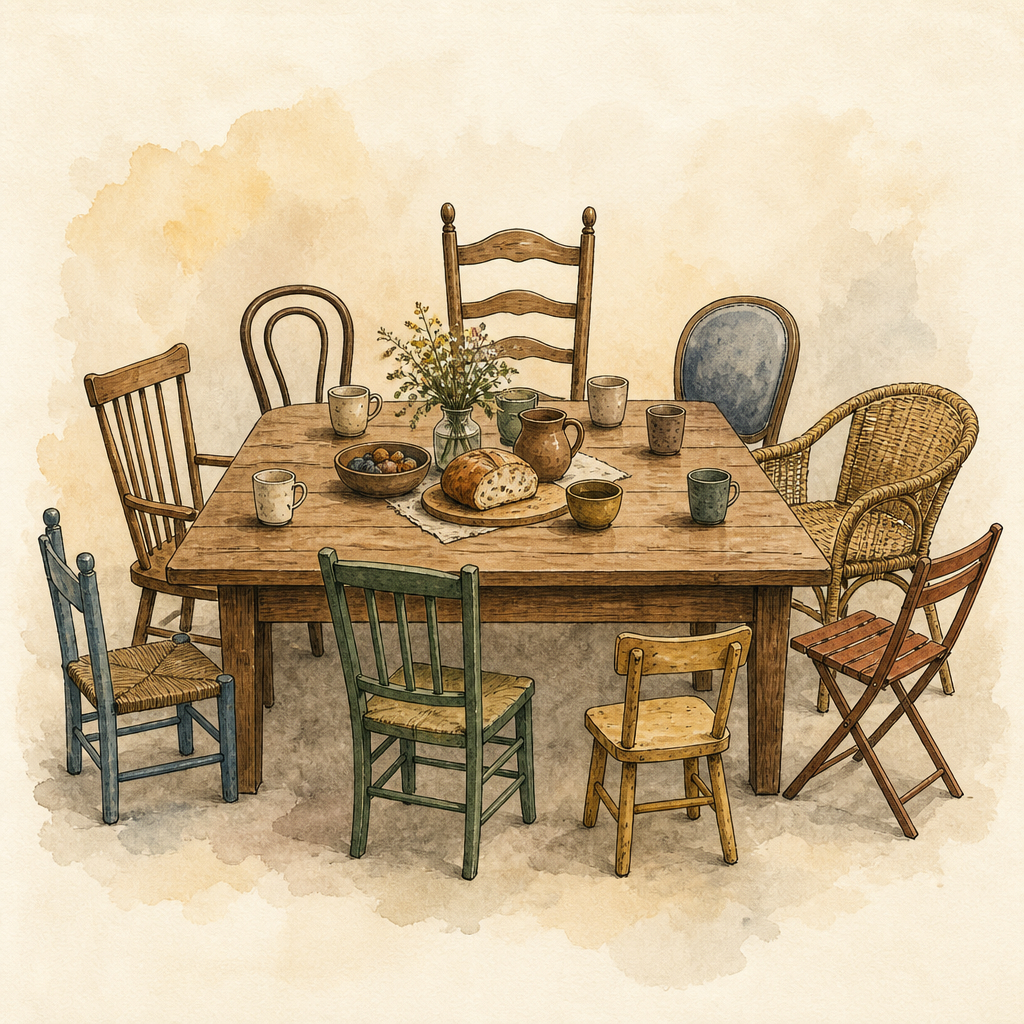
Three chairs, one continent
Next week, by the White House's own account, Trump, Putin and Xi intend to sit down together in China and call it historic. It may well be. History is not only made by the people who deserve to make it.
Meanwhile, further west, something quieter and more consequential is happening in corridors rather than banquet halls. Zelensky says Washington has floated the idea of Ukraine ceding Donbas in exchange for Nato membership. American envoys met Putin in Moscow, then flew to Dublin to meet Zelensky. Notice the order. Notice who hosted whom.
Here is a modest question, the kind a child might ask before being told to be quiet: if the land in question is Ukrainian, and the people who live on it are Ukrainian, why does the conversation about its future keep happening in rooms Ukraine enters last?
The corridor outside the room
A shared table is not simply a place where decisions about you get announced. It is a place where you help make them. Ukraine's parliament and Ukraine's voters are not a formality to be informed after envoys finish shuttling; they are the owners of the question being traded. Any deal that swaps territory for security guarantees deserves to be ratified in Kyiv, not merely relayed to it.
This is not sentimentality about borders. It is the plain mechanics of democracy: those who bear the cost get the vote. A summit of three men who each, in their own fashion, have made elections optional is not obviously the right body to decide how seriously the rest of us should take anyone else's ballot.
A different kind of table
Elsewhere this week the question of who belongs at the table took a gentler, more useful shape. Lewis Hamilton visited the Rafah crossing and Gaza aid facilities — not geopolitics, just the oldest human arithmetic: does the food cross, and does it reach the hungry. The golden rule does not require a doctorate to apply here. What you would not want done to your own family's access to bread, you should not accept being done to someone else's. Humanitarian crossings work best as boring, predictable systems, not as backdrops for visits, however well-intentioned. Dignity lives in the schedule that runs on Tuesday whether or not a camera is present.
And in Manchester, a film festival reorganised itself around African philosophies of hospitality — the idea, roughly, that a gathering is not complete until everyone invited has also helped set the table, not merely been seated at it. It is a small story next to a trilateral summit, but it carries the same lesson in miniature: the measure of a table is not its guest list but who was consulted about the menu.
The standpoint
So: pro or contra? Contra, clearly, to any arrangement — however wrapped in the language of peace — that trades a nation's territory in rooms that nation did not fully choose to be in. Diplomacy between great powers is necessary and sometimes wise; diplomacy that treats the country being discussed as scenery is not diplomacy, it is management.
Pro, just as clearly, to the unglamorous discipline of ratification, parliaments, and voters having the last word — even when, especially when, three men in a grand hall would prefer the matter settled quietly over next week.
And pro, finally, to the small acts of shared hospitality — a crossing that opens on schedule, a festival that asks its guests what they'd like served — because dignity, in the end, is rarely delivered from a podium. It is set, plate by plate, by people who insisted on helping lay the table rather than waiting politely to be told where to sit.