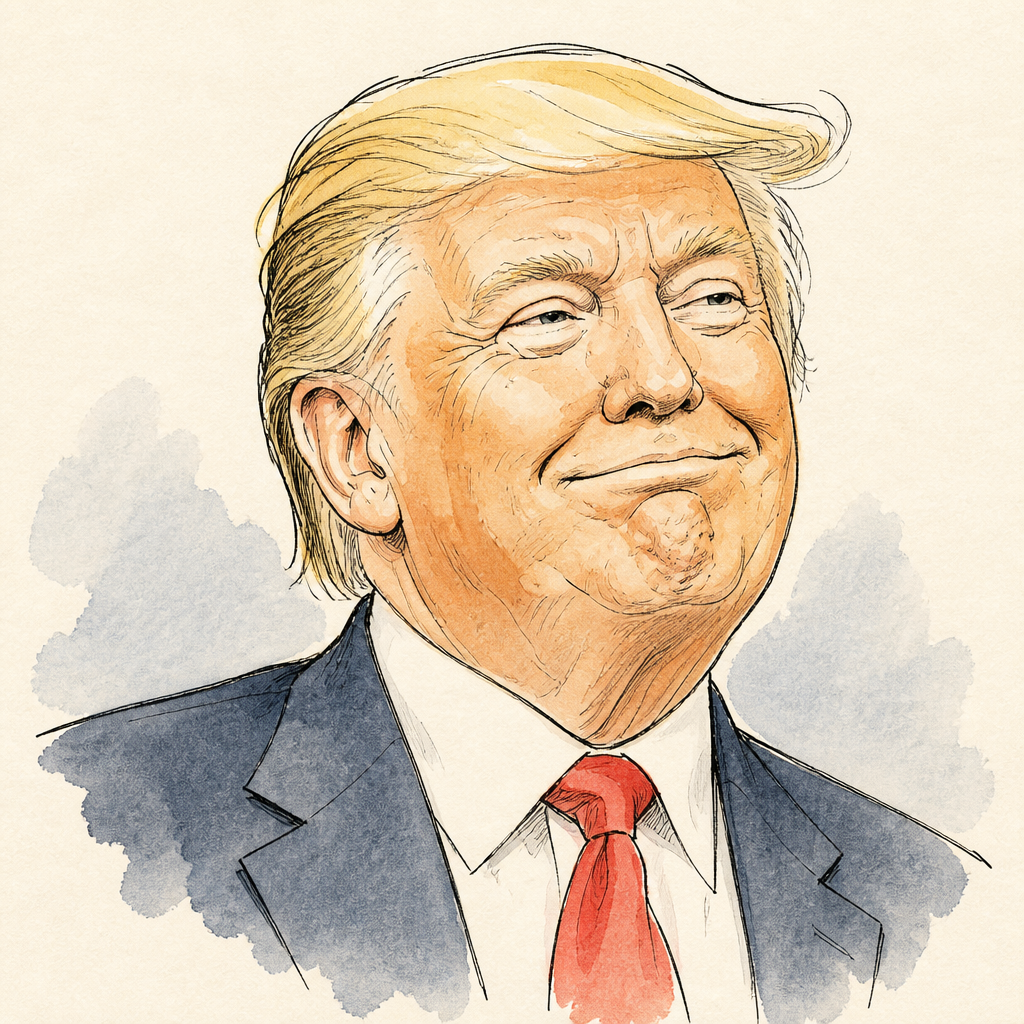
A Press Conference, and the Company It Keeps
Picture the scene: cameras ready, podium set, flags arranged just so. The American president has met with Xi Jinping and Vladimir Putin, and now steps forward to brief the world. Ask yourself a simple question before a single word is spoken: what does it mean that a democracy's head of state shares a stage, however briefly, with two men whose own people cannot vote them out?
This is not an accusation. Diplomacy requires talking to difficult men — that is half of what diplomacy is for. The question is not whether to meet, but what one brings home from the meeting. Does the democracy return with concessions for the open society, or does it return having absorbed a little of the strongman's habits — the shrug at courts, the irritation with anyone who says no?
The Court That Did Its Job
The same week, the International Court of Justice ruled that Myanmar committed genocide against the Rohingya. This is what courts are for: slow, unglamorous, built on evidence rather than applause. A judge did not invent a crisis. She read a record and named what was already there.
And yet the fear circulating is that the United States may now consider sanctions against the very judge who delivered that ruling. Sit with that for a moment. Not sanctions against the perpetrators of the genocide — sanctions, feared, against the person who confirmed it happened.
If true even in part, this is worth noticing early, the way one notices a hairline crack before the wall falls. Punishing judges for verdicts you dislike is not a policy disagreement. It is the authoritarian reflex in its purest form — the instinct Putin and Xi know by heart, because courts that answer to no one are the only courts their systems tolerate. A democracy that borrows this reflex, even once, even quietly, is borrowing something it should return unused.
Checks That Still Work, Checks Worth Keeping
Here is the more hopeful half of the week's news. In Washington, Democrats are trying to block funding for an Iran war, and a Republican senator is refusing to let government funding be held hostage to that fight. People disagree loudly, in public, using the power of the purse exactly as it was designed to be used. No one is arrested for it. This is what accountability still looks like when it is working — messy, slow, occasionally embarrassing, and far better than the alternative.
And the same week, a cybersecurity chief was removed after a string of tech outages. Perhaps this was simple accountability — someone responsible for a failure, let go. Or perhaps it follows a pattern worth watching: officials who oversee uncomfortable systems quietly replaced when those systems embarrass the administration. The difference matters, and citizens who ask which one it was are not being paranoid. They are doing their job as citizens.
The Standpoint
Here is the clear stance, not just the irony: a democracy's strength has never been its ability to sit comfortably at a table with strongmen. Its strength is the court that rules against popular opinion and survives the ruling. Sanctioning a judge for naming a genocide would not punish the Rohingya's tormentors; it would punish the idea that anyone, anywhere, can still be held to account by law rather than by power.
The readers of a free press do not need to choose between talking to difficult leaders and defending difficult judges. But if forced to choose which one defines what kind of country you are, the answer should not require a committee. Defend the gavel. The handshake can wait its turn.