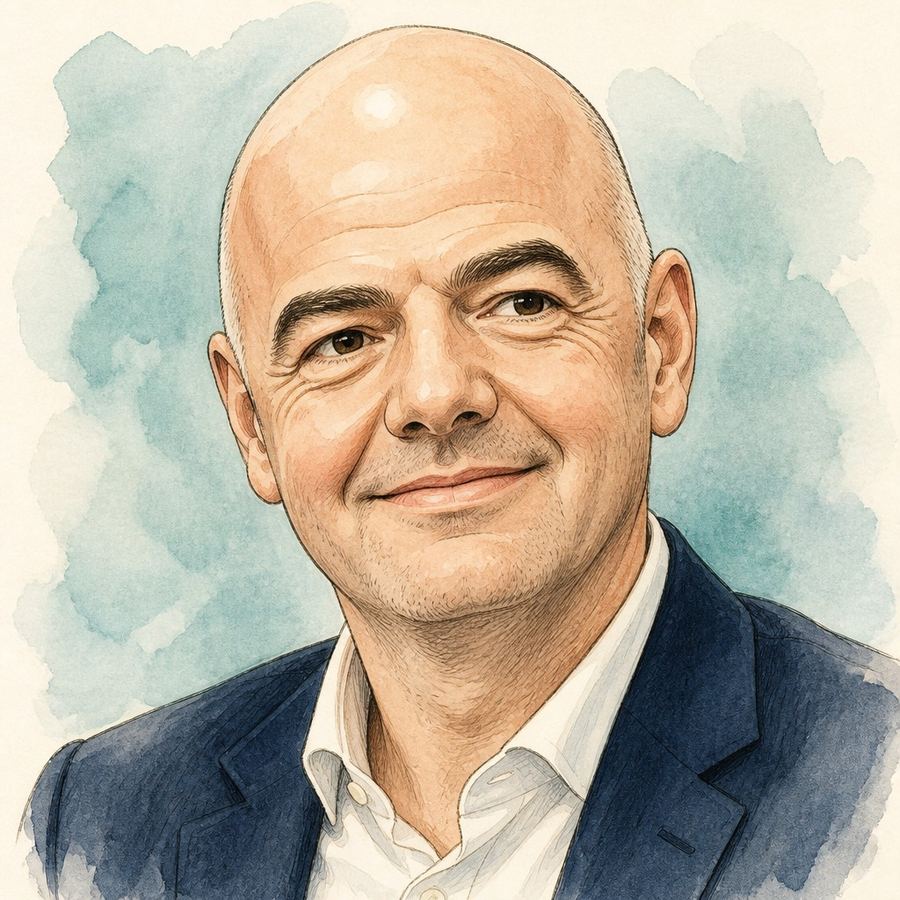
A Parliament of One
FIFA governs football with 211 member associations, each holding one vote, at least on paper. That is more members than the United Nations. Football's leaders enjoy repeating this fact, usually right before a vote goes 200-to-11 in favour of whatever the president proposed.
A reader might ask: is that democracy, or is it a very large room agreeing with one very confident man?
The Week the World Argued About Rules
Today's headlines are, on the surface, unrelated to a football federation in Zurich. The UK has sanctioned Israeli settlements and been accused by Israel of betrayal. Washington has slapped an import ban on Canadian whisky and motorbikes, and Ottawa is retaliating. Houthi missiles have set oil facilities ablaze in Saudi Arabia. Pirates are back off Somalia, exploiting a gap where order used to be.
What these stories share is not football. It is a question football's governors would recognise instantly: what happens when the people holding power decide the rules apply mostly to everyone else?
A trade partner announces tariffs and calls it negotiation. A government sanctions a neighbour and calls it principle. A federation extends its president's term and calls it stability. The vocabulary of legitimacy survives; the substance quietly moves house.
Infantino's Extended Stay
Gianni Infantino became FIFA president in 2016, in the rubble of the last corruption scandal, promising exactly the reforms that would prevent a repeat: term limits, transparency, checks on presidential power. Those reforms passed. Then, by FIFA's own accounting, the clock on those term limits was set to start from his 2016 election rather than his earlier interim role — a technical adjustment that, depending on how one counts, could let one presidency run past a decade into the 2030s.
None of this required a coup. It required a congress of 211 members voting yes, almost unanimously, to a proposal that mainly benefited one of them.
Is that corruption? Not by the narrow legal definition. Is it democracy, in the sense the word is meant to carry — accountability, rotation, the genuine possibility that the boss loses? A reader may judge for themselves, but the honest answer sits somewhere closer to "trade guild with a ballot box for decoration."
Why It Still Matters
Here the essay must be fair to football itself. A World Cup where Morocco can beat Spain, where a mixed squad wears one crest and a stadium of strangers sings together, is not nothing. International team sport rehearses, better than most institutions manage, the idea that rivals can share rules without hating each other. That is worth defending — which is exactly why its governance deserves better than a permanent incumbency dressed in the language of universal suffrage.
The same week, Australia is legislating something modest but real: letting citizens opt out of the algorithms that quietly govern what they see. It is a small, unglamorous act of a mature democracy clawing back a lever of control from an opaque system. FIFA's 211 members might notice the contrast. A vote that cannot remove a leader, audit his budget, or dissent without penalty is not a lever. It is a photograph of a lever.
The Wise Position
So: pro, contra, or weighed? Weighed, and then decided. Football's global structure is worth keeping — the mixed squads, the shared offside law, the ritual of losing gracefully to a team you'll play again in four years. But the organisation that hosts this ritual should not be exempt from the very habit it teaches on the pitch: that power rotates, that referees are independent, that no one player owns the match.
Member federations, sponsors, and fans are not powerless here. They are, in fact, the electorate FIFA claims to have. A congress that votes unanimously for its own diminishment is not a parliament; it is an audience. The reciprocity test is simple enough for anyone to apply from their sofa: would Infantino accept, from any federation, the rules he has arranged for himself? If the honest answer is no, the reform he once promised is still owed — not to rivals, but to the game.