
A Word Doing Too Much Work
This week the word "war" is being asked to cover two very different mornings.
In one, Canada's prime minister says Washington "attacked" with fresh tariffs, and Ottawa promises to strike back — with its own tariffs, starting on a date already announced, filed through ministries that will still exist on the date after. In the other, rescuers in Ukraine dig through the wreckage of a shopping mall, and a president uses the word "despicable" because there is no tariff schedule for what a missile does to people buying groceries.
Both get called wars in headlines today. Ask yourself, plainly: are they the same kind of thing?
What a Trade Dispute Actually Is
A tariff war is, underneath the theatrics, an argument conducted inside the furniture of law. There are dates, courts, elections, a Supreme Court somewhere deciding an unrelated question about a ballroom, and voters who will eventually get to grade the performance. Canada "walking away" from a deal is not surrender — it is a democracy choosing which table to sit at next. Annoying, expensive, occasionally undignified. But nobody digs a shopping mall out of rubble because of it.
That is worth noticing before the metaphor of "war" flattens everything into one grey noise. Reciprocity — the old rule that you should not do to others what you would not want done to you — still holds inside a tariff fight. Nobody is asking whether Ottawa's countermeasures will kill families in Ohio.
What the Other War Actually Is
Meanwhile Russia, reportedly now importing gas of its own because Ukrainian strikes have squeezed its energy supply, continues sending missiles the other direction — into buildings where the only military objective was a Tuesday afternoon of shopping. Syria separately says an Israeli strike near Damascus violated international law; whether or not one agrees with that particular claim, the phrase itself only means something in a world where such laws are assumed to bind everyone, including the strong.
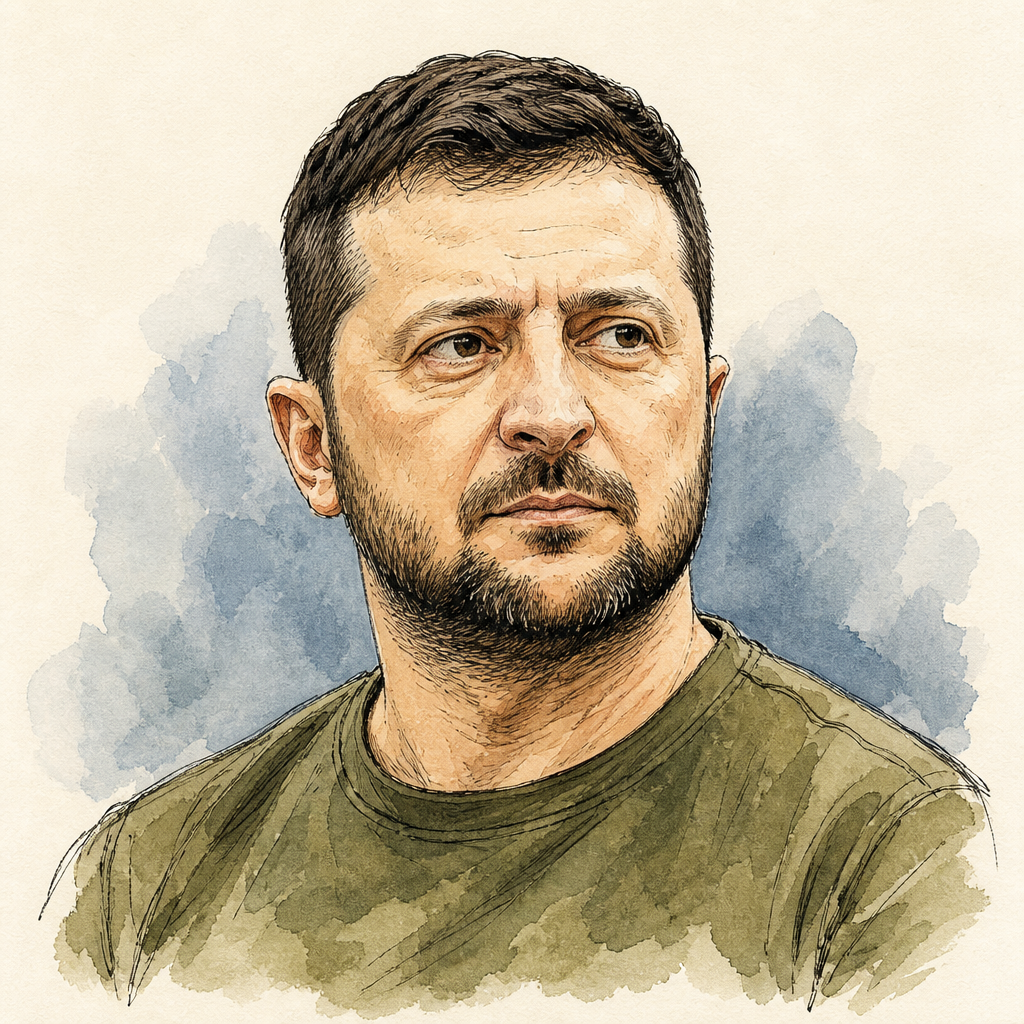
Ukraine's fight is not a metaphor. It is the plain, old-fashioned question of whether a country gets to keep holding elections, keep printing its own newspapers, keep arguing with its own government in its own language — or whether a neighbour with more tanks gets to decide that for it. Zelensky remaining head of state through years of siege, rather than fleeing or being replaced by decree, is itself a small daily referendum on whether courage and legitimacy can outlast an invasion. That is not nothing. Democracies rarely get tested this literally.
Why the Distinction Is Not Pedantry
Here is the useful discipline: when Canada and the United States trade tariff blows, we should watch it the way we watch a heated parliamentary debate — with interest, some worry, and full confidence the loser will still have a country tomorrow. When Russia trades missiles for shopping malls, we are watching something else entirely: an attempt to erase the very possibility of that kind of boring, survivable disagreement ever happening in Ukraine again.
Supporting Ukraine, then, is not sentimentality bolted onto a news cycle. It is the recognition that the tariff fight and the missile strike sit on the same ladder — one is what disagreement looks like once a society has agreed to settle disputes with institutions instead of artillery. If Ukraine's democracy is allowed to be erased by force, the lesson every autocrat draws is not subtle: force still works, and paperwork is for the weak.
Free peoples get to keep their boring arguments — trade complaints, ballroom lawsuits, marathon medal mix-ups — precisely because someone, somewhere, is still standing at a border insisting that force does not get the last word. Solidarity with Ukraine's defence, and with the civic courage of a country that keeps voting and printing and arguing even under fire, is not charity extended downward. It is maintenance work on the only kind of world where a trade war stays a metaphor.