A barrel of diesel, a favour returned
This week brought news of a diesel arrangement between Washington and Moscow — one that, by all accounts, left European capitals rattled rather than reassured. At almost the same moment, Ukraine's president told NPR that American intelligence sharing could be cut off. Two headlines, same ledger: one hand gives Moscow a market, the other hand threatens to withhold Kyiv's eyes and ears.
Is this a coincidence of timing, or a pattern? Common sense suggests asking the second question before settling for the first.
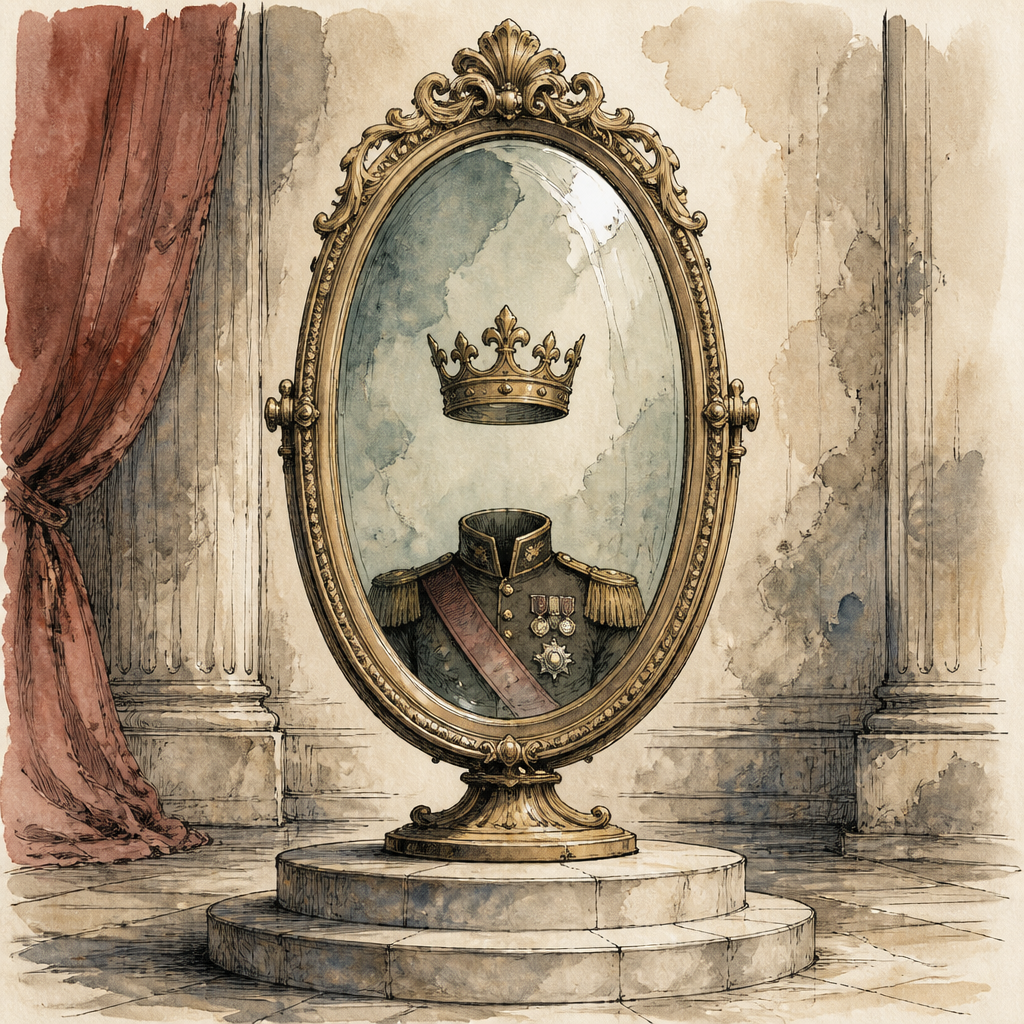
The mirror, not the microscope
Strongmen rarely examine each other the way journalists examine them. They tend to admire each other instead — the way one craftsman nods at another's handiwork. Certainty recognises certainty. A leader who prefers deals made over dinner to deals made through parliaments will naturally find another such leader easier to talk to than a messy coalition of allies who insist on being consulted.
That is the strongman's mirror: not vanity exactly, but recognition. Each sees in the other a fellow craftsman of unilateral decision, and each finds the reflection flattering.
Meanwhile NATO planners are, we are told, working out how the alliance would respond to attacks from Russia — a sober, procedural, multi-country exercise of exactly the kind strongmen find tedious. One wonders which approach a citizen should prefer: the handshake that bypasses allies, or the planning meeting that includes them.
Certainty is cheap; accountability is not
Contrast this with another item from the same week's news: a judge long associated with the International Criminal Court has been honoured for a career spent inside the slow, unglamorous machinery of international law. No diesel deals, no dramatic phone calls, no cult of personality — just the dull persistence of trying to make rules apply equally, even to the powerful.
It will not trend. It will not fill a stadium. But ask yourself which legacy a free citizen should envy: the leader remembered for a spectacular bilateral bargain, or the jurist remembered for insisting that bargains be lawful?
The domestic rehearsal
Strongman habits are not only an export product. In Pakistan this week, emergency rule was declared in a region associated with a rival former prime minister's political base — a reminder that the instinct to manage opposition through emergency powers rather than through votes is not confined to any one continent or ideology. The mirror, again: wherever certainty substitutes for consent, the shape of the move looks familiar, whatever the flag above it.
And Britain's intelligence chief, in the same week, warned that threats to the country now come bundled — Russia, Iran, and artificial intelligence named almost in the same breath. Perhaps that is the real lesson: authoritarian habits no longer need a single author. They can be assembled, automated, and exported at the speed of a server farm. A personality cult used to require a personality. It may soon only require a convincing imitation of one.
What a citizen owes the mirror
None of this requires outrage. It requires noticing. A diesel barrel is not evil; a phone call is not a coup. But when agreements are struck leader to leader while allies read about them afterward, when intelligence sharing becomes a lever rather than a commitment, when emergency rule lands conveniently on a rival's doorstep — these are not accidents of statecraft. They are symptoms of a preference: control over consultation, certainty over consent.
The wise response is neither panic nor shrug. It is the old democratic habit of asking who was consulted, who was informed, and who found out from the newspaper. Institutions are slow and sometimes maddening. But they are slow on purpose — so that no single certainty, however confidently delivered, gets mistaken for the whole truth.
The strongman looks in the mirror and sees resolve. The citizen, looking at the same mirror, might reasonably ask: resolve toward what, and accountable to whom?