
A verdict that arrived too late to matter, and one that matters too much to wait for
Bashar al-Assad was sentenced to death this week in a Damascus courtroom he will never enter, for a war he no longer commands, over a country he no longer rules. It is, in its way, a tidy piece of justice. It is also a monument to lateness. The verdict came after the graves were already full.
Compare that with Ukraine, where President Zelensky says Russia is now striking Ukrainian cities with North Korean missiles. No courtroom yet, no absentia, no historical footnote. Just this: a state under attack, in real time, trying to remain a democracy while explaining to the world that its enemy has run so low on its own weapons that it must borrow them from Pyongyang.
Sit with that borrowing for a moment. Why would the second-largest army on the continent, by its own propaganda, need missiles from a country that cannot feed itself? What does it say about the durability of an authoritarian project when it must lean on another authoritarian project to keep going? Strongmen like to be photographed standing alone. In practice they increasingly stand in a queue, passing hardware to one another — Tehran's drones yesterday, Pyongyang's missiles today — because closed systems, it turns out, are bad at building things and very good at building alliances of convenience with other closed systems.
The lesson is not "they help each other." The lesson is "we should notice sooner."
Democracies are good at moral clarity after the fact. Assad's sentence is moral clarity twelve years and hundreds of thousands of dead after the fact. The al-Assad ledger did not need a tribunal to know its balance; it needed intervention while the balance was still small. That is the whole argument for taking Ukraine's present tense seriously rather than treating it as a future case for a future court.
Ukraine's advantage — the one thing it still has that Syria's opposition never had — is that its institutions never stopped being institutions. Elections still happen when the front line allows. Courts still function. A free press still argues in public, loudly, about its own government's mistakes. That is not decoration. That is the actual thing being defended: not a flag, a functioning civic machine that can, if it survives, hold its own leaders accountable the ordinary way, at the ballot box, instead of the extraordinary way, in absentia, after everyone involved is dead or in exile.
Contrast this with Turkey's parliament this week moving to pardon thousands of PKK militants — a political settlement, however imperfect, that closes a decades-old armed conflict through legislation rather than through a courtroom verdict decades late. It is proof that negotiated endings are possible when both sides eventually decide the war has run its course. Nothing in Moscow's current posture suggests it has reached that decision. Which is precisely why solidarity now matters more than patience.
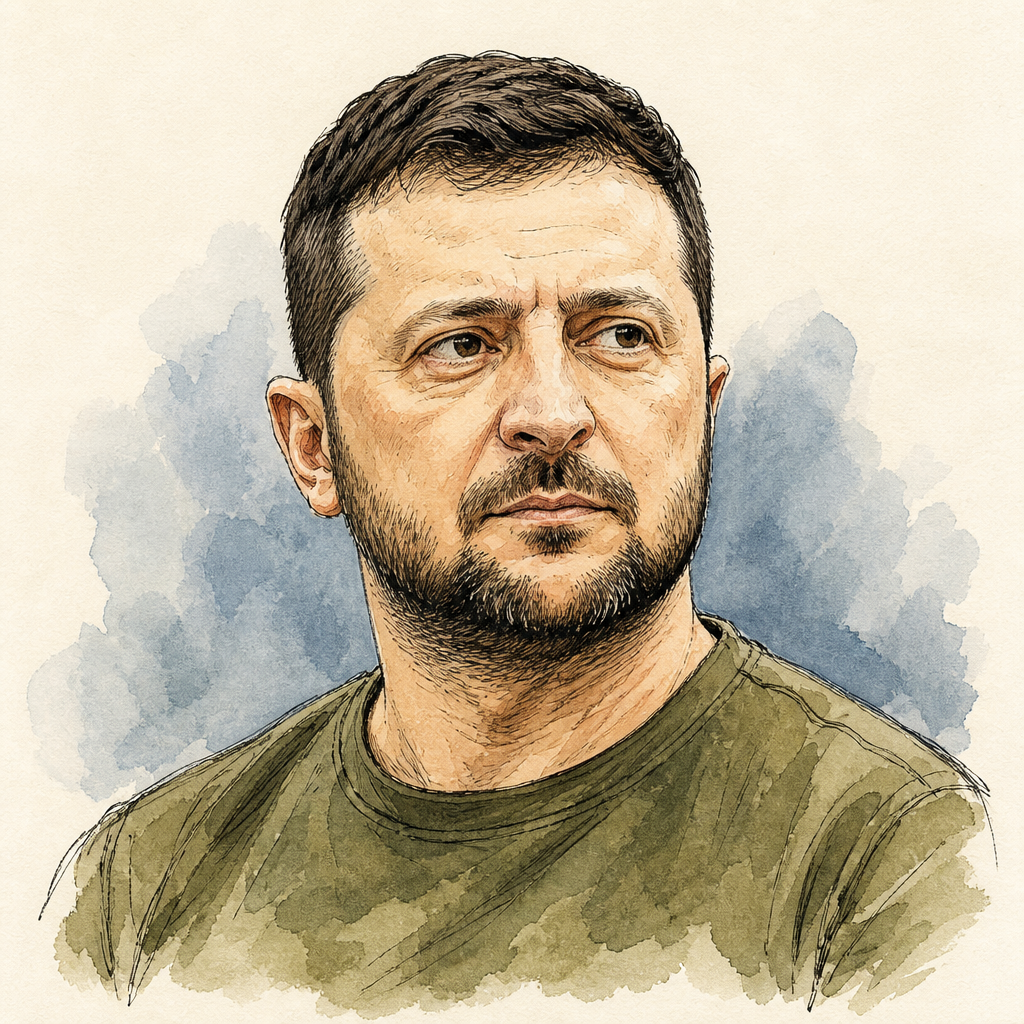
What solidarity should actually mean
Supporting Ukraine is not a slogan and it is not romance about war — this newspaper has no interest in glorifying anyone's rifle, Ukrainian or otherwise. It means sustained material support proportionate to what allied democracies can actually carry, without pretending the well is bottomless. It means keeping Ukrainian institutions — courts, elections, a free press — funded and functioning even while missiles fall, because an institution that survives the war is worth more than a battle won by a country that has none left standing.
And it means asking, out loud, the question Assad's verdict poses to every democracy watching Kyiv: will we act while the courtroom is still hypothetical, or will we wait, as we so often do, for the tidy documentary certainty of a verdict delivered to an empty chair?