The map that took four centuries to fix
This week the United Nations adopted a new world map showing Africa at something closer to its true size. For over 450 years, the Mercator projection quietly told schoolchildren that Greenland and Africa were roughly equal, when Africa is about fourteen times larger. Nobody lied outright. The distortion simply took root, generation after generation, until it looked like common sense.
Here is the first lesson of long roots: wrong ideas can grow just as patiently as right ones. Correcting them takes decades, sometimes centuries, and a great deal of unglamorous cartographic argument. If you want to know how stubborn a bad habit of mind can be, ask a map.
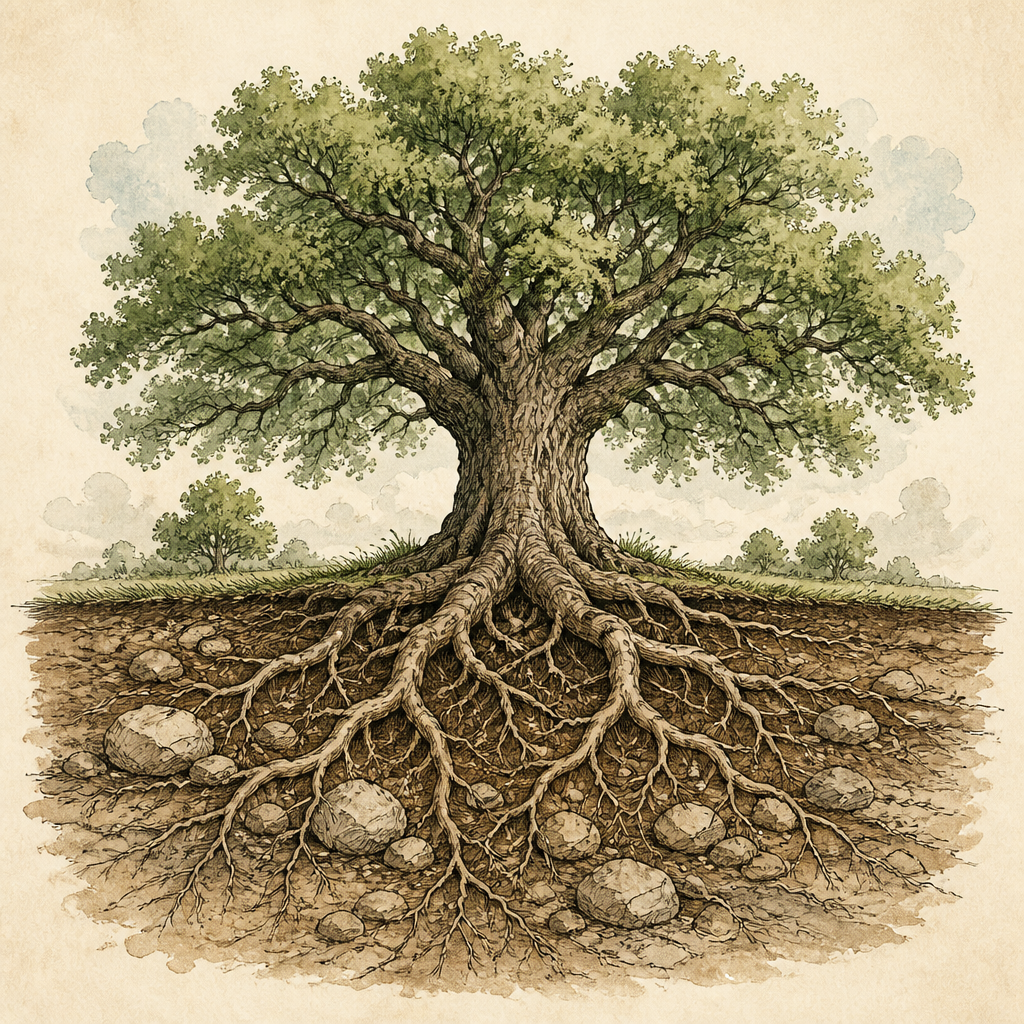
An oak does not fall from a clear sky
Germany's far-right AfD has just posted its strongest regional results yet in the east, short of a majority but impossible to ignore. Commentators across Europe are treating it as sudden weather. It is not weather. It is an oak — planted in the economic anxieties and thinned civic trust of the years after reunification, watered by every cycle of "they don't listen to us," grown crooked because the soil around it was never properly tended.
You cannot chop down an oak with one election, and you cannot grow a healthy one with one either. The useful question for German democracy, and for every democracy watching nervously, is not "how do we win the next news cycle" but "what have we failed to plant for thirty years, and are we willing to plant it now, slowly, in unglamorous places — trust, local institutions, the sense of being heard?" Panic is a fast-growing weed. Institutions are oaks. Only one of them survives the winter.
Sixty-six years and still waiting
Survivors of the 1960 Sharpeville massacre in South Africa are, this week, still asking for compensation that has not come. Sixty-six years is longer than most human institutions live, longer than most readers of this essay have been alive. It is a brutal reminder that the roots of injustice can outlast the roots of remedy — that a state can promise accountability and let the promise sit, ungrown, for two generations.
This should trouble anyone who likes to imagine that justice, once declared, arrives on schedule. It does not. It has to be replanted by every generation that still cares enough to ask. The Sharpeville survivors are, in effect, still watering a sapling that others stopped tending decades ago. Whether that oak ever reaches full height depends on whether enough people keep asking, past the point where it stops making headlines.
Peace talks rich in symbolism, poor in roots
Meanwhile in Kyiv and Moscow, envoys shake hands, call meetings "substantive," and Volodymyr Zelensky quietly tells the truth: he expects the war to continue into winter. The talks are, by every account, rich in symbolism. Symbolism is a flower, not a root. It can bloom in an afternoon and wilt just as fast, because it was never attached to anything underground — no verified borders, no enforceable guarantees, no rebuilt trust between two governments who have spent years proving to each other exactly how much they cannot be trusted.
A real peace, if one ever comes, will not look like a handshake photograph. It will look like ten boring years of monitored ceasefire lines, reconstruction contracts, prisoner accounting, and diplomats doing paperwork nobody photographs. That is what an oak of peace looks like while it is still underground. Anyone promising a quick, photogenic peace is selling you a cut flower and calling it a forest.
So what should the reader plant today
The instinct of the news cycle is to reward whatever changes fastest — an election result, a summit photo, a map correction that finally happened. But the things that actually hold a society upright — an independent judiciary, a habit of showing up to vote in the unglamorous regional election, a compensation claim pursued for sixty-six years without giving up, a peace treaty built on inspection regimes rather than handshakes — these grow too slowly to be news, and that is exactly why they last.
The useful discipline, this Monday and every Monday, is to ask of any headline: is this an oak, or is this a flower dressed up to look like one? Vote, protest, and demand accountability as if you were planting something you will not see mature. That is, historically, the only kind of planting that has ever worked.