The Night Shift Nobody Applauds
Somewhere on the Mississippi this week, a crew did its job and every passenger came home. Somewhere in a data center, exhausted engineers spent days untangling a global outage that had locked millions out of their own inboxes, and then apologised for it plainly, without spin. Neither event made anyone a hero in the cinematic sense. Nobody gave a speech. People simply did the work in front of them, competently, until the problem was solved.
Compare that to the diplomacy on offer elsewhere this week: a Russian leader raising his demands even as envoys shuttle between Moscow and Dublin trying to find a peace he does not seem eager to let them find; a White House strategy toward Iran that one commentator summarised, not unfairly, as "keep things as they are." Managing a stalemate is not nothing. But it is not quite work either — not the kind that produces a fixed inbox or a rescued ship. It produces another news cycle about demands.
Two Ways to Leave a Job
Then there is the small, almost administrative story of Indonesia's vice-president resigning once his academic credentials came under serious question. It will not lead many bulletins for long. But notice what it is: a public official, confronted with doubt about whether he actually qualifies for the work he holds, stepping back rather than digging in. Compare it with how many leaders elsewhere respond to far graver doubts about their fitness — by doubling the demands, not downsizing the office.
Nvidia's chief executive stepping down this week belongs to the same quiet category, even if the circumstances differ. An orderly handover, an interim leader inheriting real risk and a real mess, and presumably getting on with it rather than being coronated into permanence. None of this is glamorous. All of it is what responsible work looks like when nobody is building a personality cult around it.
The Golden Rule, Applied to a Timesheet
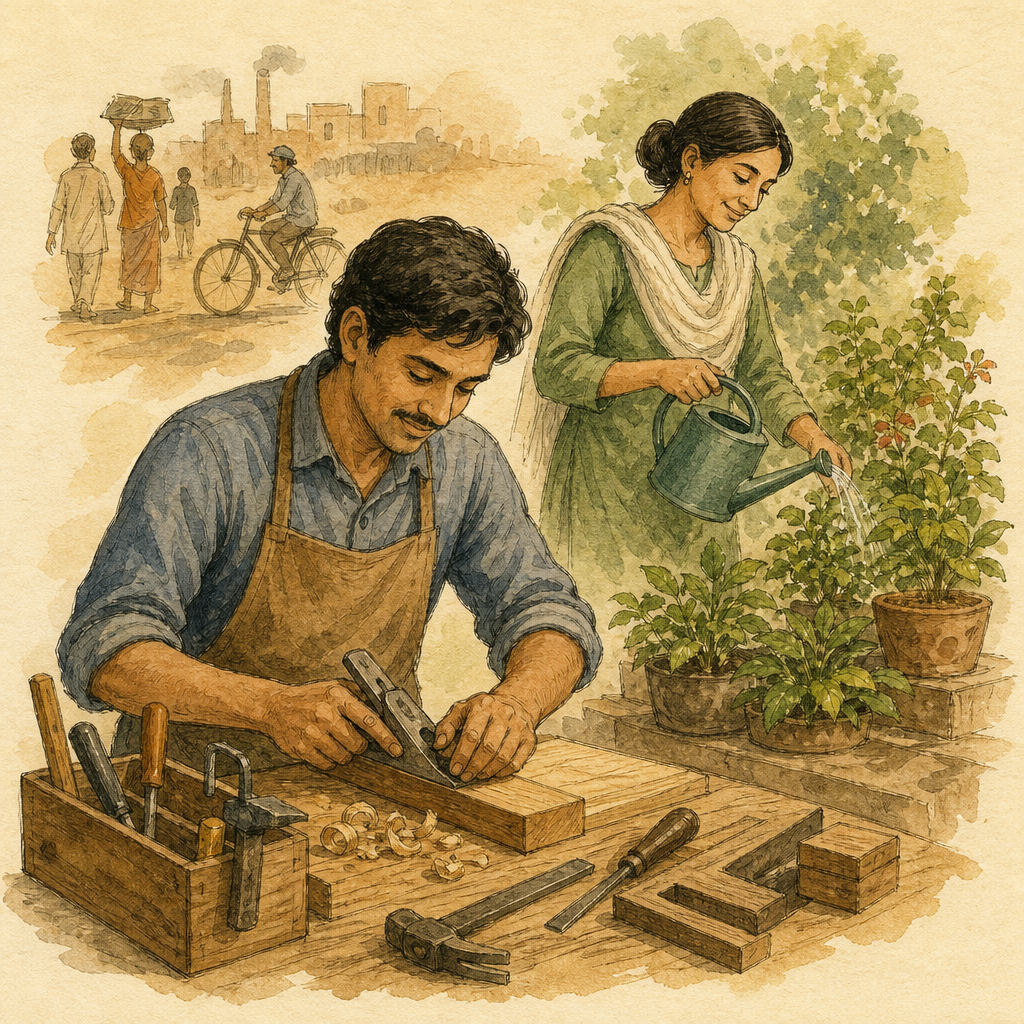
There is an old, almost embarrassingly simple idea buried in all this: those who can contribute, should — and should also know when they can no longer contribute well, and step aside without being dragged. Not as an ideology of grind, and not as cruelty toward anyone who genuinely cannot work — the sick, the very old, the disabled deserve support, not shame, and a decent society carries them without asking for a receipt. But for everyone else, work done honestly is a form of neighbourliness. The cruise crew did not rescue strangers for applause; they did it because that was the job, and doing the job is itself a kind of respect for the people depending on you.
This is also, quietly, a democratic virtue. Authoritarian habits tend to reward loyalty over competence, spectacle over maintenance, demands over delivery. A system that lets an under-qualified vice-president resign, lets a company replace a chief executive without a coup, and expects an apology when a service fails its users, is a system still capable of holding people accountable to the work itself rather than to their image of themselves doing it. That accountability is unglamorous. It is also the opposite of the strongman instinct, in which failure is never admitted and demands only ever rise.
So What Should We Actually Admire
The reasonable position is not to romanticise labour for its own sake, nor to sneer at anyone slower or unable to keep up. It is to notice, plainly, which kinds of effort this week actually solved a problem for someone else — a stranded passenger, a locked-out inbox, a public office that needed a qualified occupant — and which kinds merely occupied the stage while the problem persisted. Admire the first. Ask harder questions of the second. That is not radical. It is just common sense, applied to who, this week, actually showed up to work.