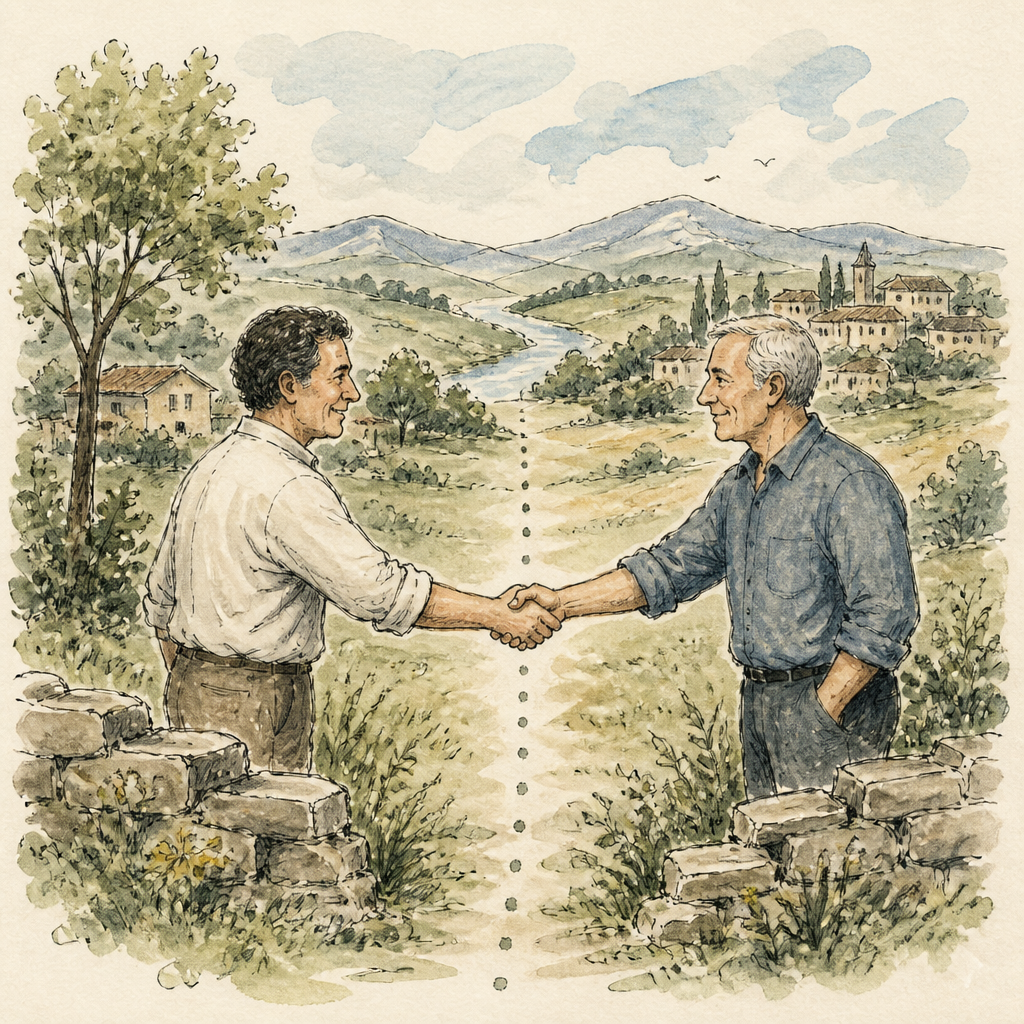
A border returns, briefly
Somewhere between Barcelona and Rome, a Schengen dream is being politely interrupted. Spain says it will introduce temporary checks on visitors arriving from Italy — two founding members of the same union, two countries that spent decades dismantling the very checkpoints now being dusted off.
Is this a betrayal of the European project, or a sign that it has grown up enough to admit friction without collapsing?
A slogan says: open borders, forever, no exceptions. A neighbourhood says: sometimes we check, we explain why, we set an end date, and we still borrow each other's ladders when the roof leaks. The second is harder to put on a flag. It is also the only version that has ever actually worked.
The test is not the checkpoint, it's the conversation
Ask yourself the plain question every reader can answer without a policy degree: would you rather your neighbour install a camera and tell you about it, or install one and pretend it isn't there? Reciprocity is not complicated. What you would not want done to you without explanation, do not do to others without explanation.
Spain's checks may prove nothing more than administrative caution — a pause, not a wall. The test of European neighbourliness was never whether a border could vanish completely. It is whether, when a check returns, it comes with a reason, a limit, and a willingness to lift it. Bureaucracy that hides its purpose breeds resentment; bureaucracy that states its purpose and its expiry date is just a fence with a gate — the kind good neighbours actually use.
Fires do not check passports
Meanwhile in France, hundreds have been arrested over the wildfires, and the headlines are already doing what headlines do after a disaster: hunting for someone to blame. It's a very human reflex. It is also, on its own, a poor policy.
Fires that cross hillsides do not pause at administrative lines, and neither should the cooperation that fights them. The useful question after a wildfire is rarely just "who lit it" — it is whether the regions, and the countries beside them, share equipment, warnings, and water before the next dry summer arrives. Blame is cheap and instant. Coordination is slow and unglamorous. Only one of them puts out fires.
The bunker and the handshake
And then there is Switzerland — neutral by doctrine, yet holding more nuclear bunkers per capita than any nation on Earth. It is worth sitting with that irony for a moment rather than rushing past it. A country that avoids alliances has still built, quietly and thoroughly, the most elaborate shelter system in the world.
What does that tell a continent still arguing about passport lanes? Perhaps that neutrality is not the absence of preparation — it is preparation done alone. The European choice, imperfect and occasionally clumsy as Sunday's headlines show, has been the opposite bet: that shared institutions, shared rules, and yes, occasional shared irritations, protect people more reliably over decades than the best bunker protects them over a single bad afternoon.
A reasoned stance, not just a shrug
So here is where this newspaper lands, without pretending both sides are equally wise: temporary, transparent, time-limited border checks between democracies are not a crack in European cooperation — they are evidence that the cooperation is real enough to survive honesty. What would be worrying is not the checkpoint near Barcelona; it would be a checkpoint that never says when it will close, or a fire-blame contest that never turns into a shared prevention plan.
Neighbours, unlike strangers, are allowed to ask each other for a reason. They are also expected to eventually put the fence gate back on its hinges. Watch whether that happens. That, more than any slogan about open borders, is the actual measure of whether Europe's neighbourliness is a habit — or only ever was a poster.