A Small Rebellion Over Bedsheets
Somewhere in a corporate policy meeting, someone finally said the quiet part out loud: guests who pay for a bed should not also be made to strip it. Airbnb's new rule, banning hosts from forcing guests to do the cleaning staff's job, sounds almost too small to matter. But look closer. It is a tiny restoration of an old idea — that work has an owner, and that owner should be paid for it, not quietly outsourced to whoever happens to be standing in the room.
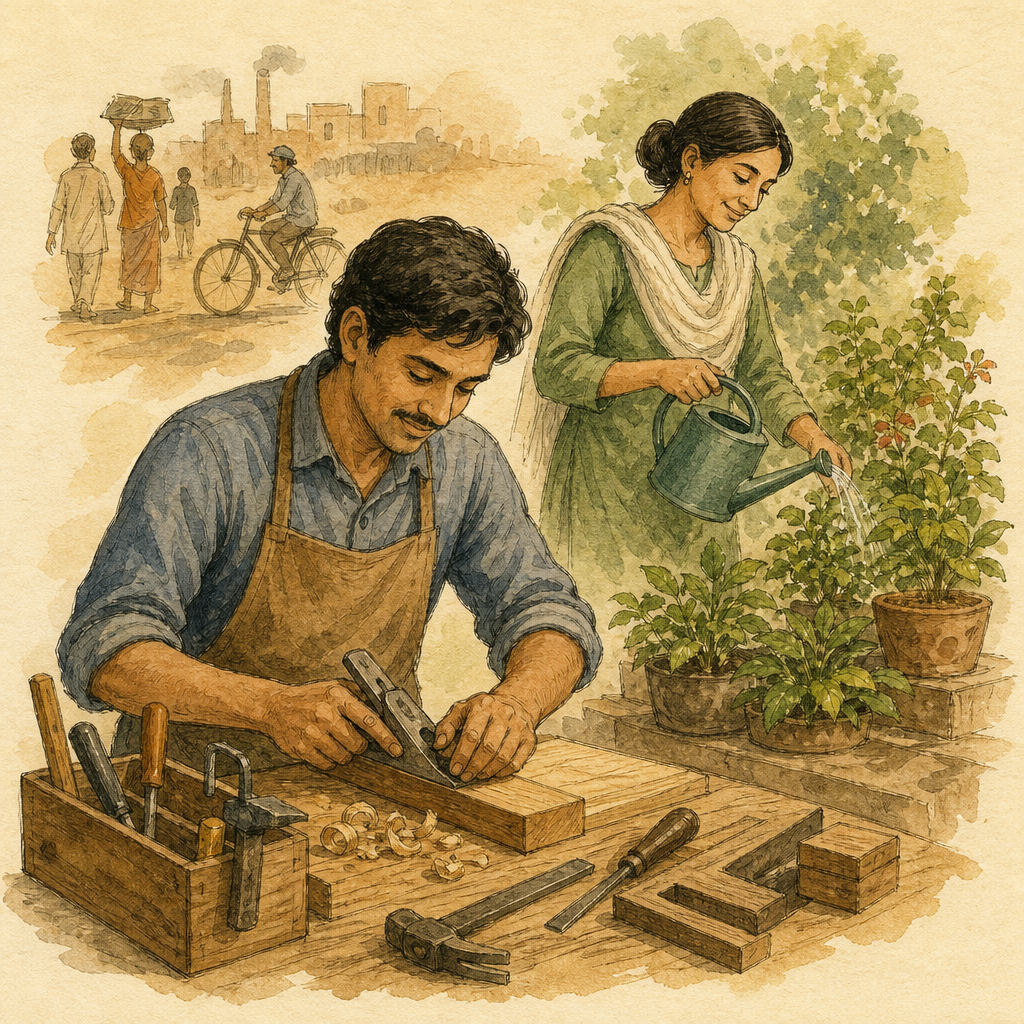
Why does this matter beyond hospitality? Because dignity of work cuts both ways. It means those who can contribute should — and it means the person actually doing the job deserves to be seen and paid, not erased behind a smiling request to "please tidy up before you go."
The Invisible Patch
Today a large share of the internet needed emergency surgery, after a security flaw in PHP — the quiet scaffolding behind a huge portion of the world's websites — forced administrators everywhere to scramble. Most users never noticed. Most never will know the names of the people who wrote the patch.
That is worth sitting with. Behind almost every convenience modern life depends on sits someone's unglamorous, often underpaid labor: maintaining code, fixing pipes, emptying bins, cleaning rooms between guests. A society that admires entrepreneurs on stages while forgetting the people keeping the lights on has not actually solved the dignity-of-work question. It has just decided whose work gets applause.
So here is the first half of a reasoned stance: contribution deserves recognition proportional to its importance, not its visibility. The volunteer patching a server at 2 a.m. and the cleaner stripping fifty beds a day are both doing real work. Pretending otherwise is not humility — it is convenient blindness.
When Contribution Isn't Possible
Now the harder case. Advocates report that severely ill detainees in U.S. immigration custody face deportation to countries they have no connection to, with little clarity about what awaits them there. Whatever the legal arguments, one moral question sits underneath: what does a society owe someone who, through illness, cannot currently work, argue, or even stand up for himself?
This is where "dignity through work" becomes dangerous if it curdles into "worth through productivity." The two sound similar. They are not. The first says: contribute if you can, because idleness serves no one, including you. The second says: if you cannot contribute, you no longer count. One builds a decent society. The other builds a cruel one with excellent paperwork.
The Golden Rule Audit
A useful test, older than any policy memo: would you want to be treated this way if illness made you unable to work tomorrow? Would you want your government's answer to be a flight to an unfamiliar country, quietly, with no one watching?
Most of us, honestly asked, would say no. That answer should constrain policy even when the person being discussed is a stranger, an immigrant, someone without a sympathetic photograph attached to his name.
A Reasoned Stance
So: yes, those who can work should work, and contribute, and be recognized for it — the cleaner, the coder, the diplomat trying again this week to talk Moscow and Kyiv toward something resembling peace. Responsibility is neighbourliness; idleness as an ideal helps no one, least of all the idle.
But the test of a mature democracy is not how it treats its most productive citizens. It is how it treats the ones who, for now, cannot produce anything at all — the sick, the detained, the person who cannot even strip his own bed. A society that only values contribution has simply built a more efficient form of indifference.
Dignity of work and dignity of the person are not the same thing. The wise stance keeps both, in the right order.