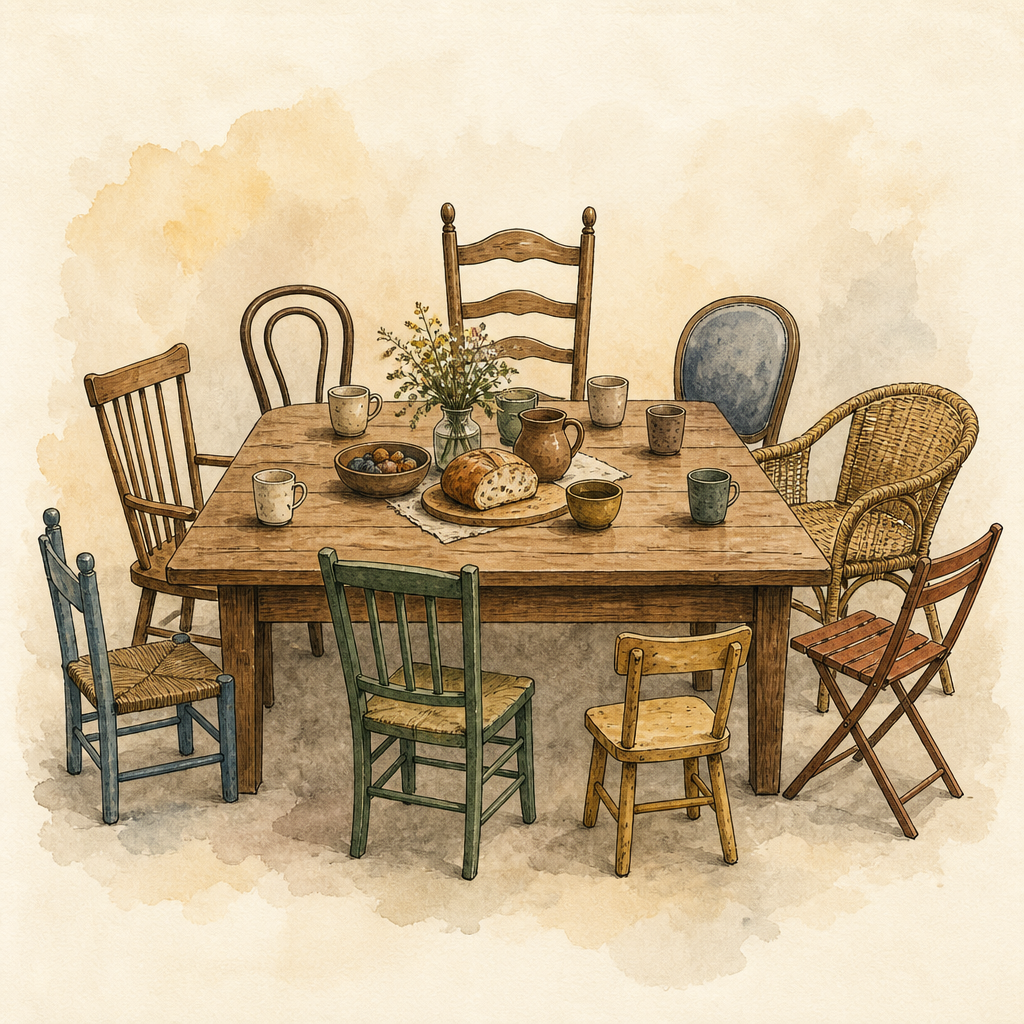
The table gets longer
This week Brussels offered Canada something unusual in diplomacy: not a loan, not a lecture, but a chair. 'Associate membership' in the EU is a modest phrase for an interesting idea — that a country an ocean away might sit closer to the table without giving up its own house. Canada seems inclined to say yes.
Nobody is pretending this solves everything. Associate status is not full membership; it is more like being invited to dinner without being handed a key to the apartment. But notice what it signals: in an age of walls, someone is still building tables. That is worth noticing before it is worth cheering.
A table that stays open even mid-argument
Half a year into the war with Iran, the United States will let an Iranian delegation attend UN meetings in New York — even as UN-backed experts raise the possibility that US strikes, including one on a school, may amount to war crimes. Ask yourself: is it weakness to let your adversary sit in the room, or is it the last functioning definition of civilization?
History suggests the second. Wars end, eventually, at tables, not in the absence of them. Keeping a seat open for someone you are furious with is not the same as forgiving them. It is simply refusing to let the argument become the only language left.
The chairs nobody is fighting to fill
Now turn to South Africa, where a ninth woman's body has been found, part of a string of deaths that has left many women describing themselves, starkly, as prey. This is not a metaphor about tables. This is about who gets to keep living long enough to sit at one.
Femicide is not a uniquely South African failure — it is a universal one wearing local clothes — but it deserves the same global attention as any war crime, any headline-grabbing diplomatic snub. A woman erased from her own life is erased from every table she might have set: for her children, her community, her country's future.
Selective outrage is its own quiet prejudice
Here is the uncomfortable question the week also raises. The United States has moved to bar some South Africans over claims of anti-white discrimination — a policy response swift enough to make headlines. Compare the speed of that outrage to the pace of concern for nine murdered women, most of them not white, whose deaths are being investigated as a pattern rather than announced as a policy crisis.
This is not an argument that discrimination claims are never real; reciprocity — treating others as you'd wish to be treated — applies to everyone, including white South Africans who feel targeted. But dignity cannot be a currency that trades at different rates depending on who is complaining and who is only dying. If a government can move fast to protect one group's grievance, the same government's citizens are entitled to ask why urgency is not universal.
A humbler, more useful kind of welcome
Elsewhere this week, Kenyan mothers are turning to an AI-powered chatbot to help prevent deaths in childbirth — a small, unglamorous widening of the table, technology quietly pulled up a chair for women who are usually last to be served by any system, digital or governmental. No treaty, no summit, just fewer women dying because someone finally asked what they needed.
That is the real test of a shared table: not who gets a ceremonial seat in Brussels or New York, but whether the people with the least power — a mother in labor, a woman walking home at night — are treated as if their survival matters as much as anyone's photograph at a summit.
The shared table is not proven by who is invited to sit. It is proven by who is still alive to pull out their own chair.